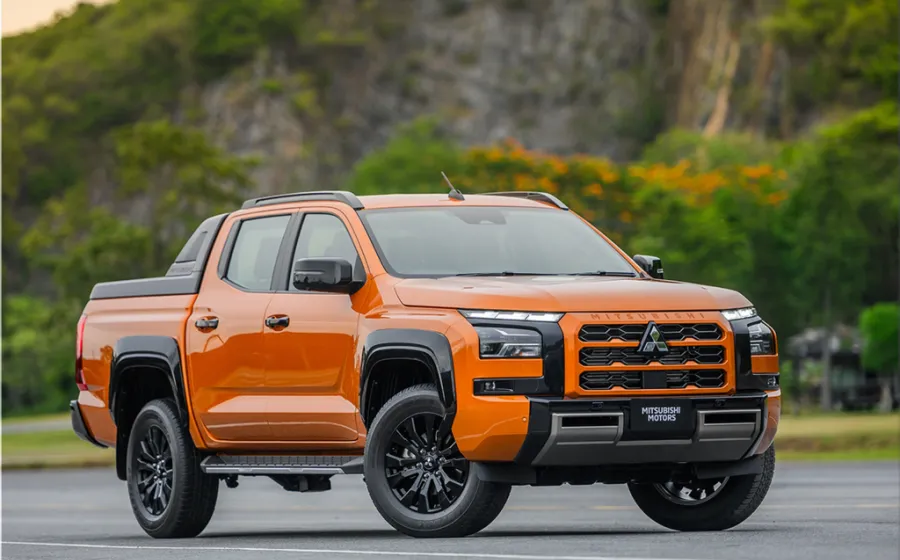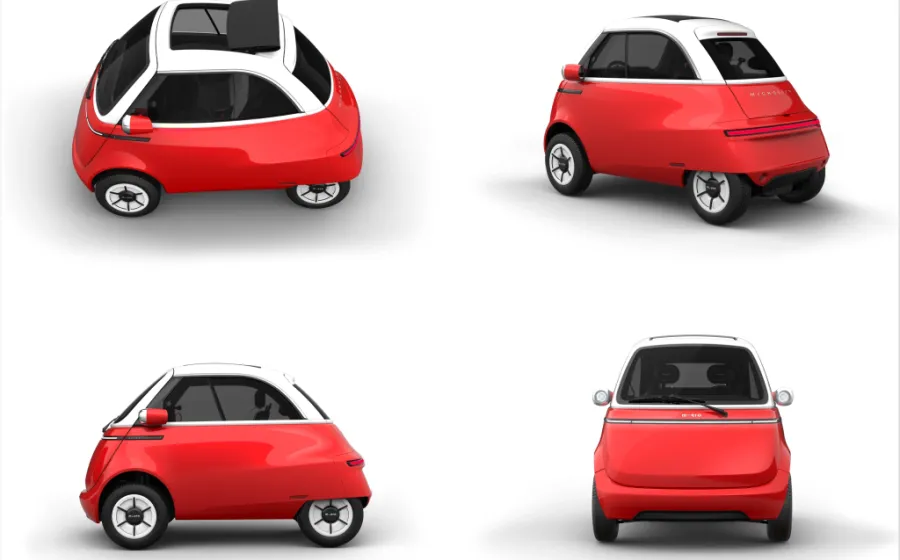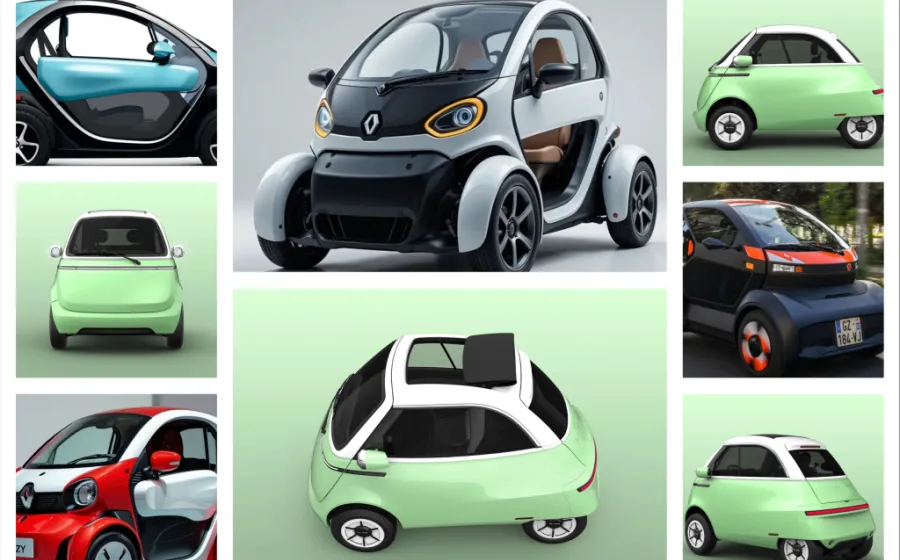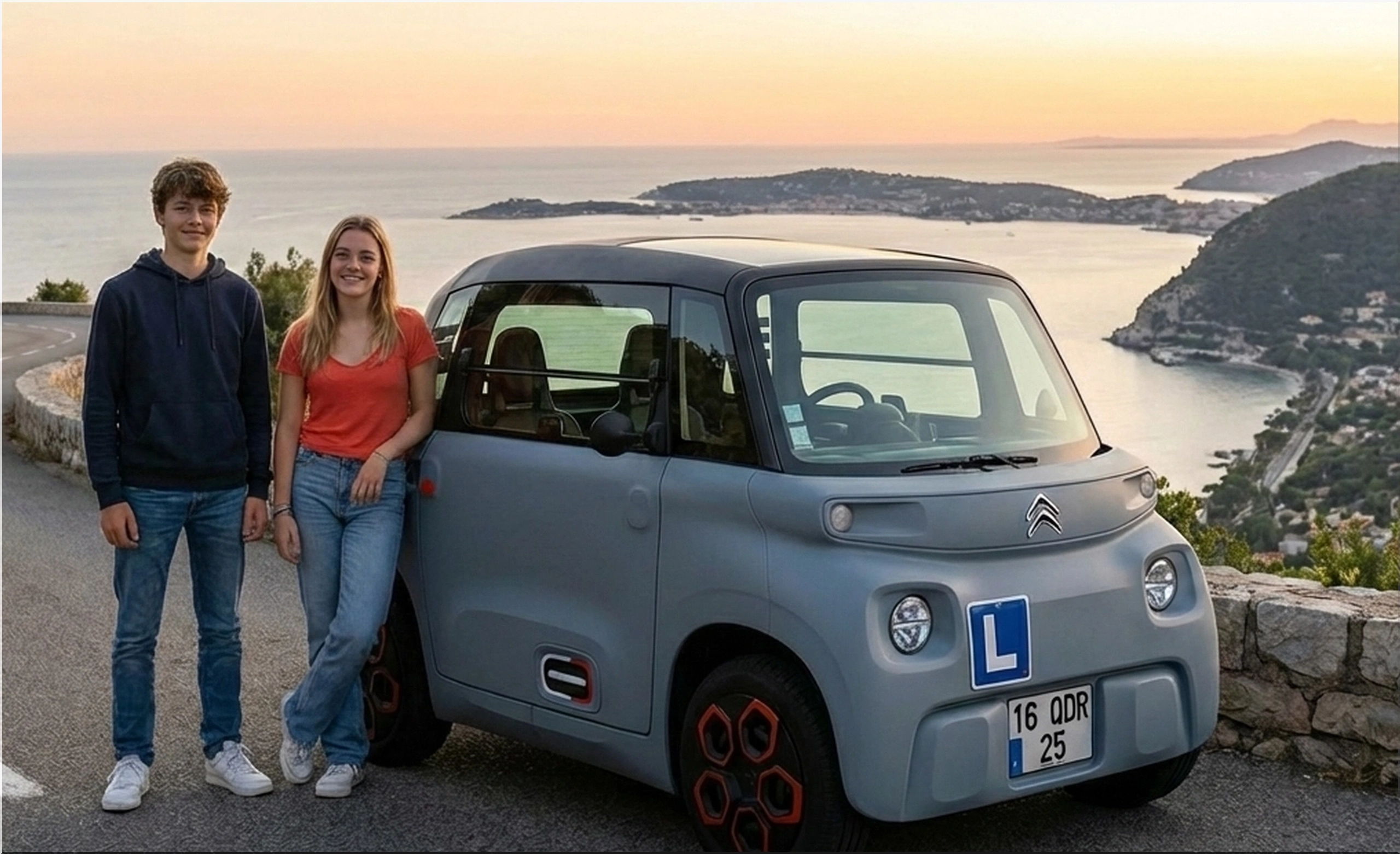
Many countries let young drivers start early with quadricycles. The details depend on your local licence class, the quadricycle category (L6e or L7e), and any age or training requirements. Use this guide to check if you can drive at 16 and what boxes you must tick before hitting the road.
Quick answer
You can often drive a light quadricycle (L6e) from mid-teen years, while heavy quadricycles (L7e) typically need an older minimum age or a higher licence. Rules vary by country, so confirm your local highway code before you buy.
Definitions you need first
- L6e (light quadricycle): Capped at 45 km/h with low power and strict mass limits.
- L7e (heavy quadricycle): Up to 15 kW with higher mass limits and higher design speeds.
- Mass in running order: Vehicle weight ready to drive with standard equipment and fluids.
- Type-approval number: The official code on the vehicle’s documents proving it meets L-category rules.
Who can drive at 16? The short version
- Most permissive pathway: An entry-level licence aligned to mopeds often covers L6e from around 16.
- More restrictive pathway: L7e usually needs a higher licence category and may require you to be older than 16.
- Local exceptions exist: Minimum ages, passenger rules, and road access differ by country and sometimes by region.
Licence classes: what to look for
- For L6e (45 km/h): Check if your country has a moped-style licence that allows light quadricycles at 16.
- For L7e (up to 15 kW): Look for a higher licence class that explicitly covers heavy quadricycles or microcars.
- Pro-Tip: Ask your insurer which licence they require for the exact model you want. Insurers sometimes apply their own interpretations.
Tests you might need
- Theory test: Signs, right-of-way, and hazard awareness basics.
- Practical test or approved training: Low-speed handling, braking, and urban maneuvers.
- Medical or eyesight checks: Short, routine assessments in many jurisdictions.
- Parent/guardian consent: Common for under-18s when applying or insuring.
Insurance at 16: how to keep premiums sensible
- Compare L6e vs L7e quotes; L6e is often cheaper.
- Add telematics or a driver monitor for discounts.
- Store off-street and fit security devices if they reduce risk.
- Put the policy in the primary driver’s name; avoid fronting.
Vehicle restrictions you should expect
- Speed and roads: L6e is limited to 45 km/h and often restricted from high-speed roads. L7e can go faster but may still be banned from motorways.
- Passengers: Many countries limit passengers for young drivers, especially on L6e.
- Equipment: Seatbelts, lights, mirrors, wipers, and demist functions are essential for legal and safe use.
Documents to check before you ride
- Licence class and age: Confirm the exact clause that mentions L6e or L7e.
- Type-approval and CoC: The vehicle’s Certificate of Conformity and type-approval number must match.
- Insurance certificate: Ensure cover is valid for the driver’s age and the vehicle’s class.
- Owner’s handbook: Note service intervals, tyre specs, and any braking or winter guidance.
At-a-glance: typical pathways by class
| Class | Typical minimum age trend* | Usual licence type | Road access reality |
|---|---|---|---|
| L6e (light) | Mid-teens | Moped-style entry licence | 30–50 km/h streets; high-speed roads usually off-limits |
| L7e (heavy) | Older teens or adult | Higher light-vehicle class | Faster roads sometimes allowed; motorways often restricted |
*Trends vary by country. Always check local law.
Step-by-step: confirm you can drive at 16
- Identify the class: Is your target model L6e or L7e?
- Find the rule: Look up your country’s licence that names L6e or L7e and note the minimum age.
- Check tests: Confirm if you need theory, practical, or approved training.
- Verify road access: List any roads you cannot use (motorways, ring roads, minimum-speed sections).
- Get insurance quotes: Compare multiple providers for the exact driver age and vehicle class.
- Inspect the vehicle: Confirm type-approval documents and safety equipment.
- Practice routes: Plan low-speed practice loops before mixing with busy traffic.
EU L6e vs L7e licence and minimum age by country.
How to read this
- L6e (light quadricycle): up to 45 km/h. Usually needs AM licence (moped/light quadricycle).
- L7e (heavy quadricycle): up to 15 kW; faster than 45 km/h. Needs B1 where implemented, otherwise B.
- Ages shown are the earliest age you can legally drive each class (common supervised schemes noted in “Notes”). National rules can add conditions like passengers, roads you can use, or protective gear.
Country-by-country table (snapshot: December 28, 2025)
| Country | L6e licence + minimum age | L7e licence + minimum age | Notes |
|---|---|---|---|
| Belgium | AM at 16 | B at 18 (17 with supervised provisional) | Carrying a passenger in L6e allowed from 18. |
| Denmark | B or AM (stor knallert); in practice AM is 18 and most 4-wheel cabin scooters require B | B at 17 supervised / 18 solo | 4-wheel 45 km/h cabin scooters typically require B. |
| Finland | AM/121 at 15 | B at 18 | AM/121 is the moped-car entitlement. |
| France | AM at 14 | B1 at 16 | L6e often called “voiture sans permis”. |
| Germany | AM at 15 | B at 18 (BF17 supervised at 17) | AM valid EU-wide only from 16; BF17 limited to DE/AT. |
| Ireland | AM at 16 | B at 17 | Ireland does not implement B1. |
| Italy | AM at 14 | B1 at 16 (B at 18) | Passenger rules vary by model and age. |
| Netherlands | AM/AM4 at 16 | B at 18 | NL does not implement B1. |
| Portugal | AM at 16 | B1 at 16 (B at 18) | B1 exists and covers L7e up to 15 kW. |
| Spain | AM at 15 | B at 18 (B1 planned nationally but not yet in force) | EU’s new directive enables B1 at 16; Spain must implement before Oct 2028. |
| Sweden | AM at 15 | B at 18 | AM covers “mopedbil”. |
| Poland | AM at 14 | B1 at 16 (B at 18) | AM is the earliest across EU. |
| Romania | AM at 16 | B1 at 16 (B at 18) | Schools enroll from 15y9m; national rules allow B1 from 16. |
Use this table as a planning aid. Always verify locally before you buy, register, or insure a quadricycle.
Definitions
- AM: moped and light quadricycle entitlement.
- B1: heavy quadricycle entitlement (up to 400 kg empty for passengers or 550 kg for goods; 15 kW max).
- BF17 / supervised B: national scheme allowing B at 17 with an approved adult in the car.
Key takeaways
- AM is the norm for L6e across the EU, but the minimum age varies: 14 (Italy, Poland), 14 France, 15 (Finland, Germany to 15), 16 (many countries).
- L7e requires B1 at 16 where offered (France, Italy, Portugal, Poland, Romania). Countries without B1 require B at 17–18 (Germany, Netherlands, Ireland, Sweden, Belgium, Spain currently).
- Spain has signaled a forthcoming B1 at 16, aligned with the new EU driving licence directive; until transposed nationally, L7e needs B at 18.
Pro-tips
- Insurance and road access vary. Many countries restrict L6e from motorways and expressways; insurers may require specific driver ages even if the licence allows earlier. Check policy wording.
- Passengers in L6e: several countries allow a passenger only from 18 or when the vehicle is type-approved for two seats.
- Documentation: when driving cross-border with early-age entitlements (AM at 15, BF17), check recognition rules to avoid fines.
What now?
- Pick your country, confirm the exact licence path (AM, B1, or B), and budget for theory, practical lessons, medicals, and exam fees.
- If you plan cross-border travel or relocation, target B at 18 to remove most L7e limitations.
Country notes and sources
- Belgium: AM covers light quadricycles from 16; category B covers motorised quadricycles; passenger in L6e from 18.
- Denmark: 45 km/h cabin scooters need AM (18) or B/MC; 4-wheel versions generally require B; B available from 17 with accompanied driving.
- Finland: AM/121 at 15 for moped car; L7e needs B at 18.
- France: L6e with AM at 14; L7e with B1 at 16.
- Germany: AM nationwide at 15; L7e with B at 18 (or BF17).
- Ireland: AM at 16; B at 17; B1 not implemented.
- Italy: AM at 14 for L6e; B1 at 16 for L7e; B at 18.
- Netherlands: Brommobiel needs AM/AM4 at 16; B1 not implemented; heavy quadricycles fall under B at 18.
- Portugal: AM at 16; B1 at 16 by law; B at 18.
- Spain: AM at 15; L7e requires B at 18 until Spain introduces B1 (EU-level change adopted Oct 2025; national transposition pending).
- Sweden: AM at 15 (covers mopedbil); B at 18.
- Poland: L6e from 14 with AM; L7e from 16 with B1; B at 18.
- Romania: AM at 16; B1 at 16 permitted by national regulation; schools enroll from 15y9m.
Safety tips for new teen drivers
- Build speed gradually: Keep to calmer streets while learning.
- Tyres first: Fit quality all-season or winter tyres for your climate.
- Be seen: Use daytime running lights where legal and maintain clean windows.
- Weather plan: Pre-defog and keep a microfibre cloth handy.
FAQs
Can I carry a passenger at 16 in a quadricycle?
Sometimes, but passenger rules vary by country and licence class. Check the small print.
Can I use a quadricycle for school and weekend jobs?
Yes, if your licence and insurance allow it. Confirm permitted roads along the route.
Do I need a special charger?
Most electric quadricycles charge from a standard household socket. Confirm cable length and parking access.
What now? Your action checklist
- Shortlist L6e models if your routes are 30–50 km/h and you qualify at 16.
- Confirm licence class, age, and tests on your country’s official portals.
- Get insurance quotes early and add any required security.
- Book a test drive and practice on calm streets before peak traffic.
- 292 views