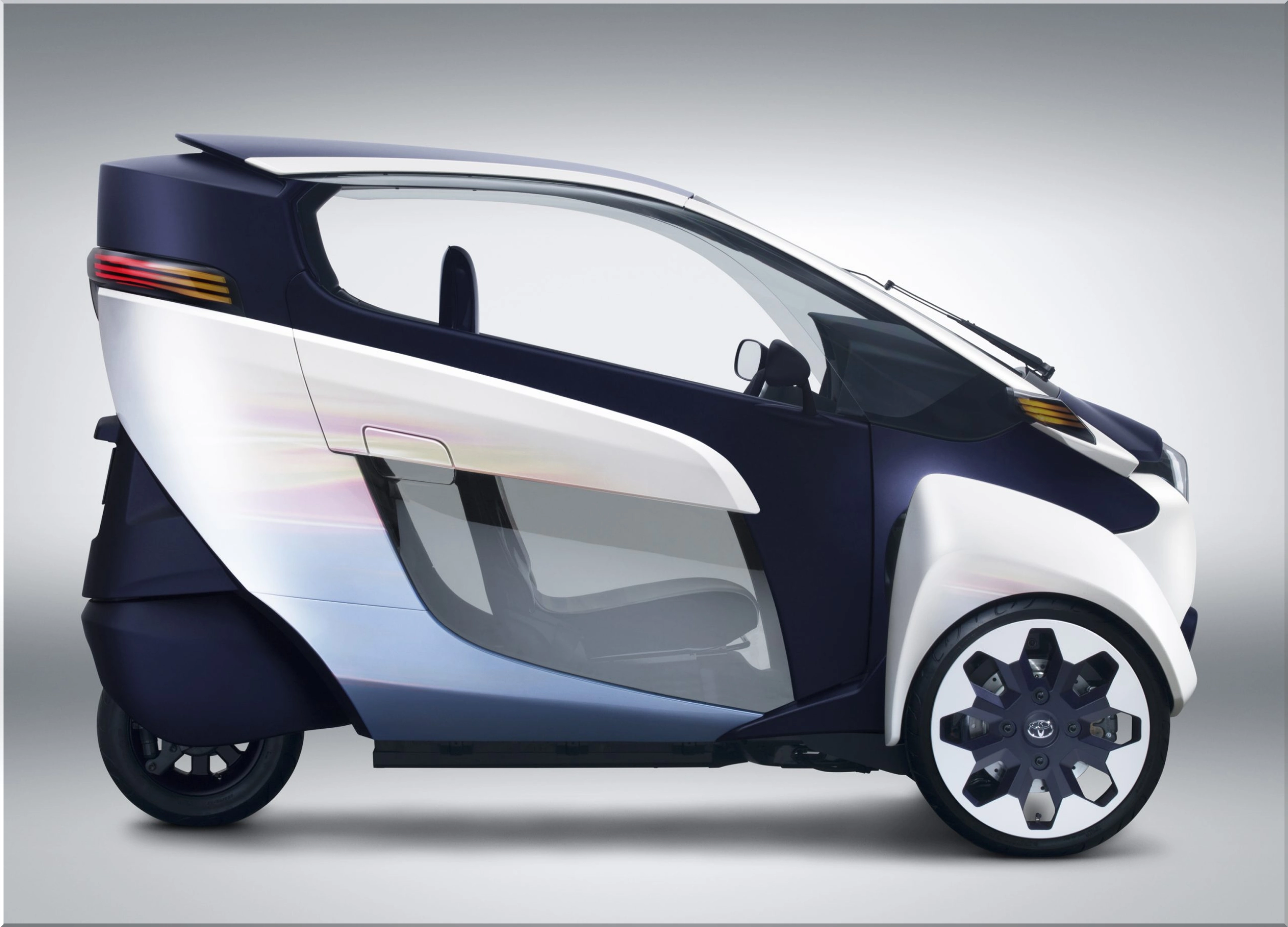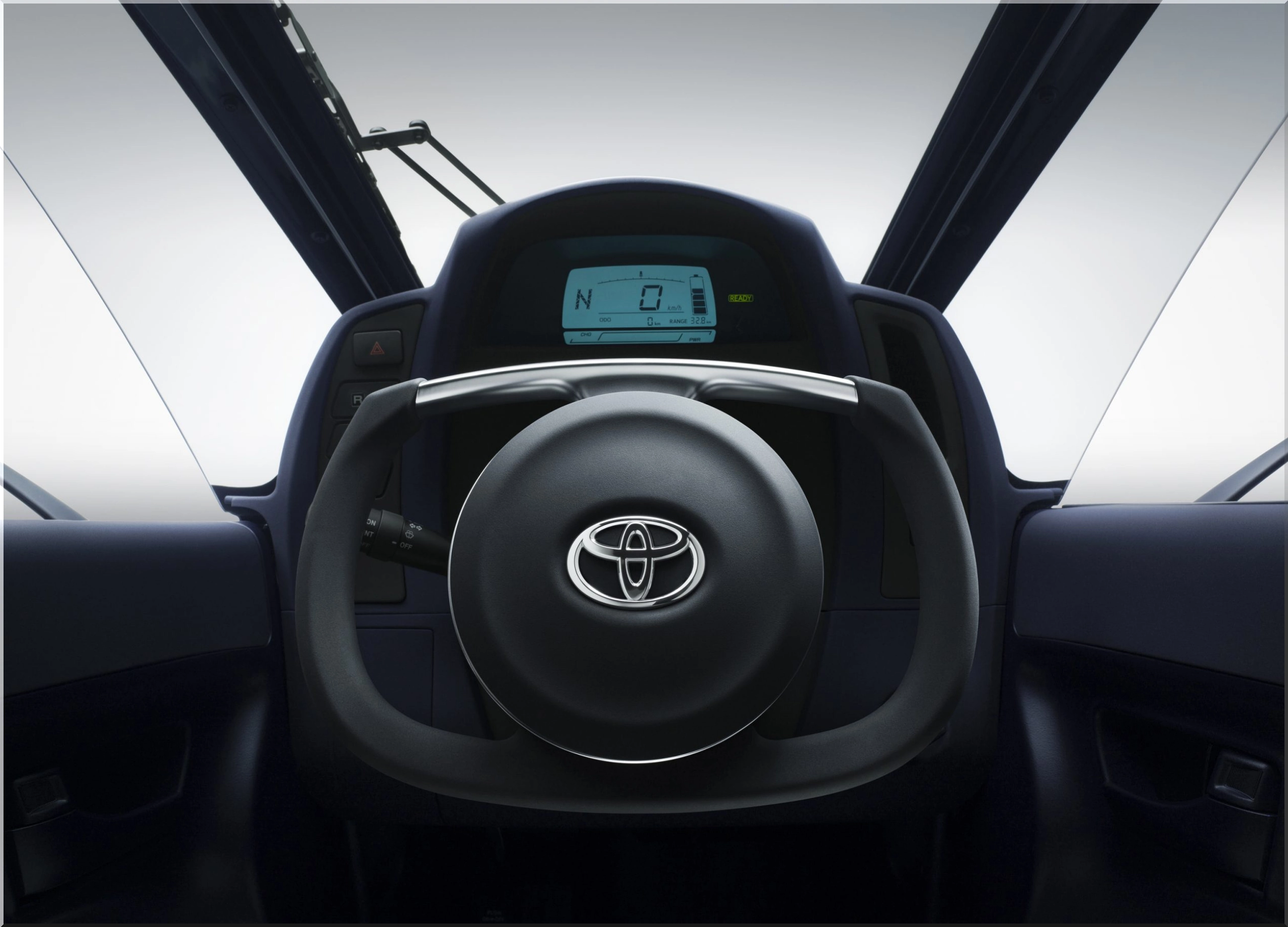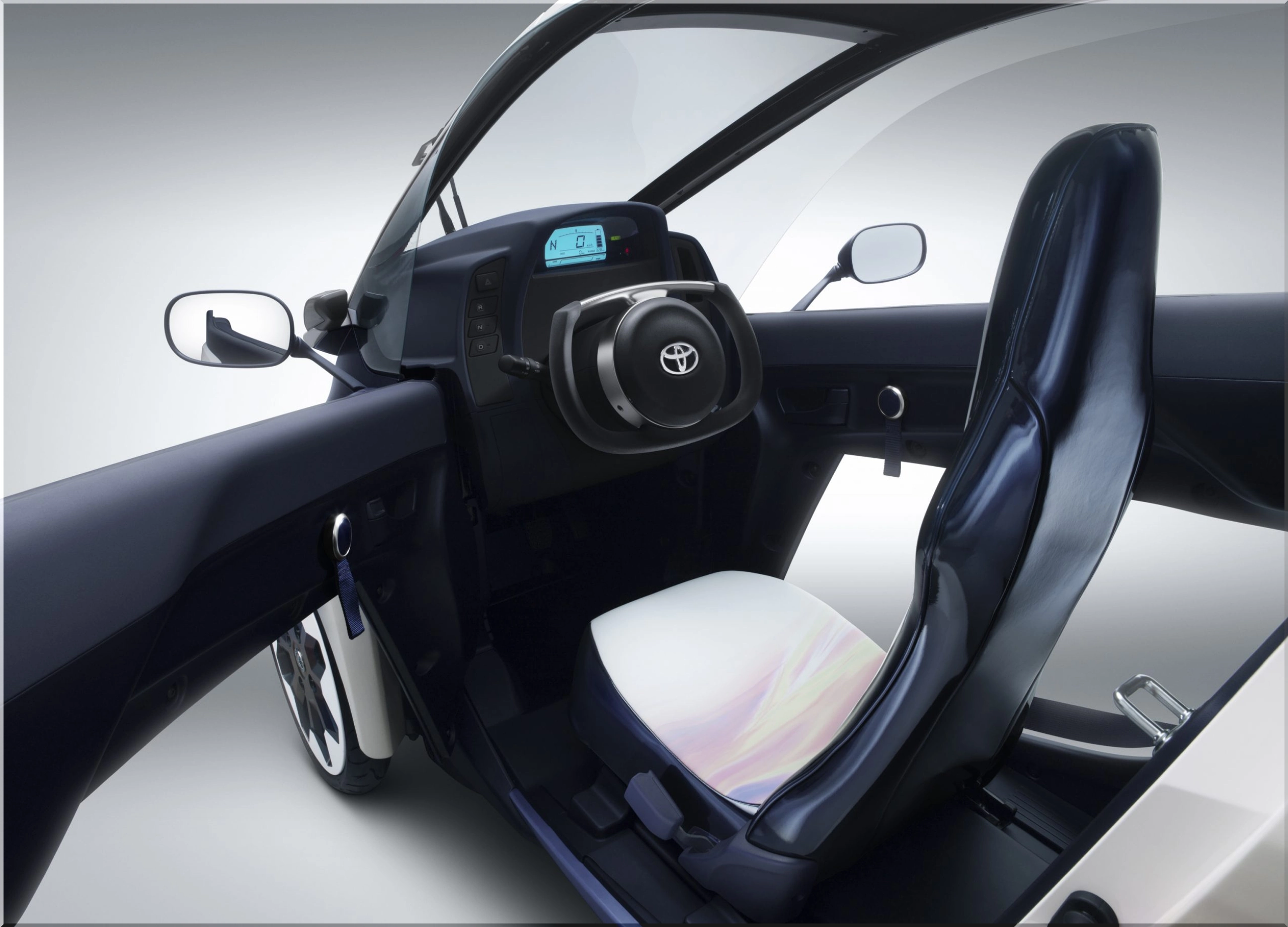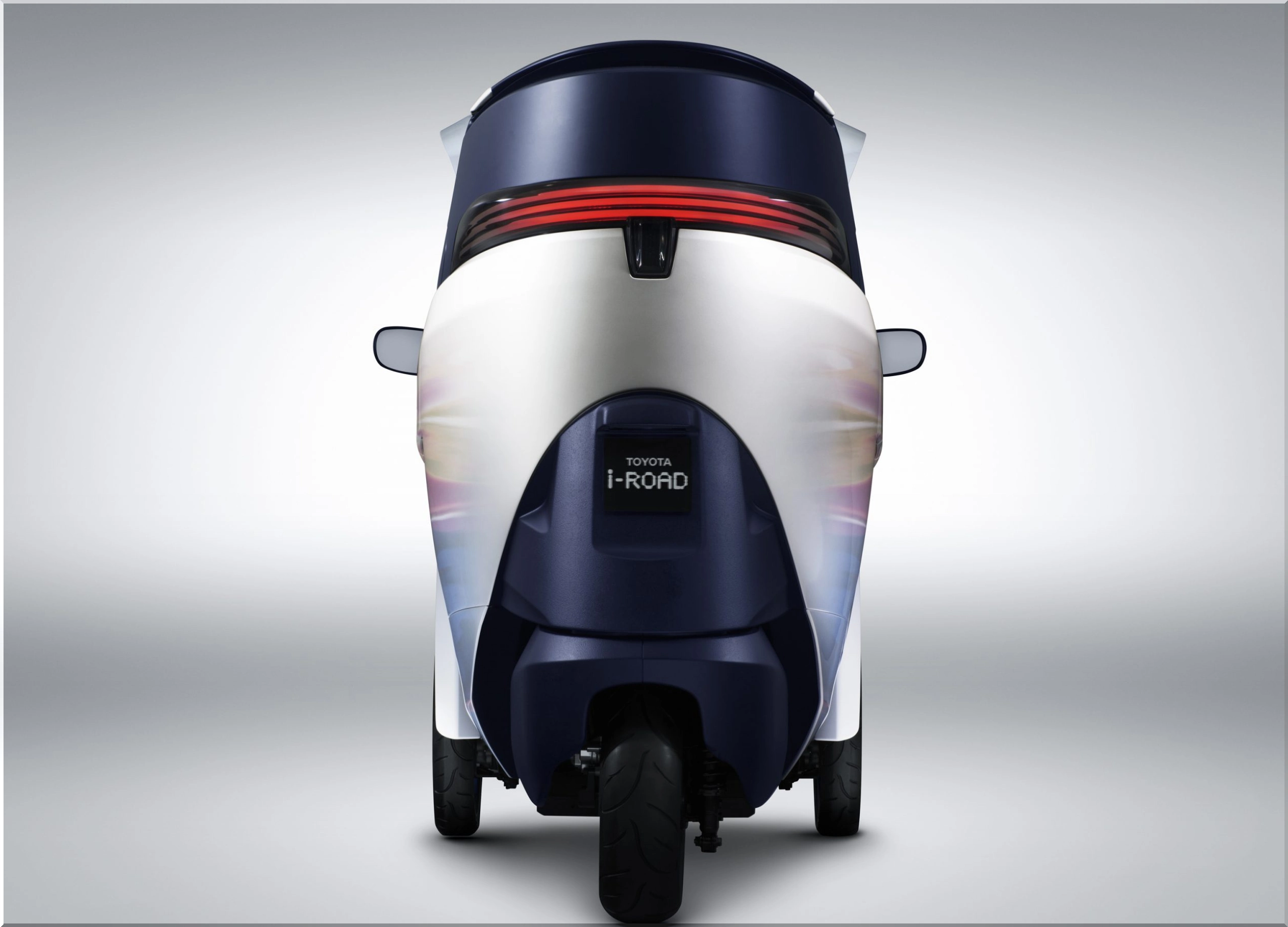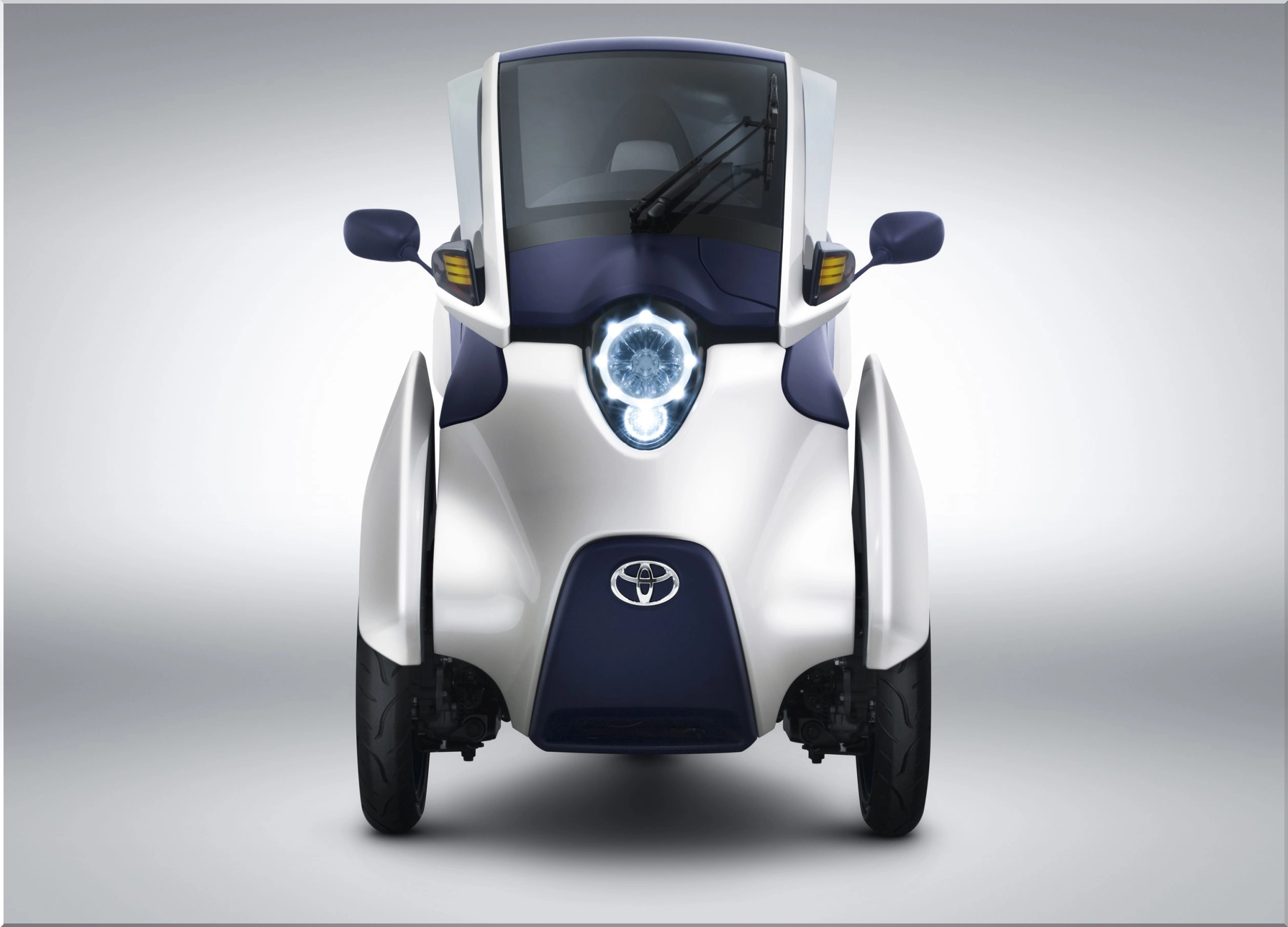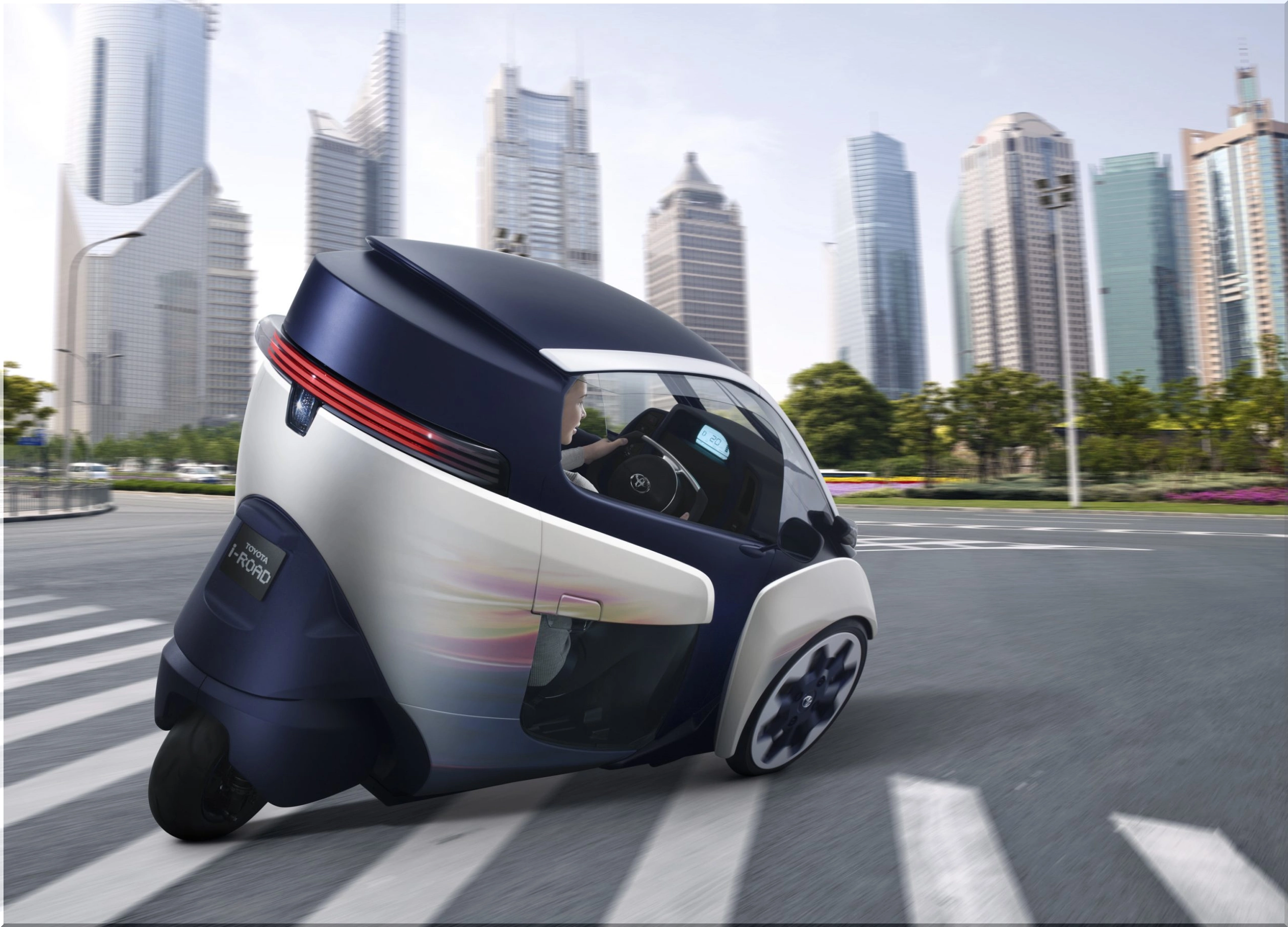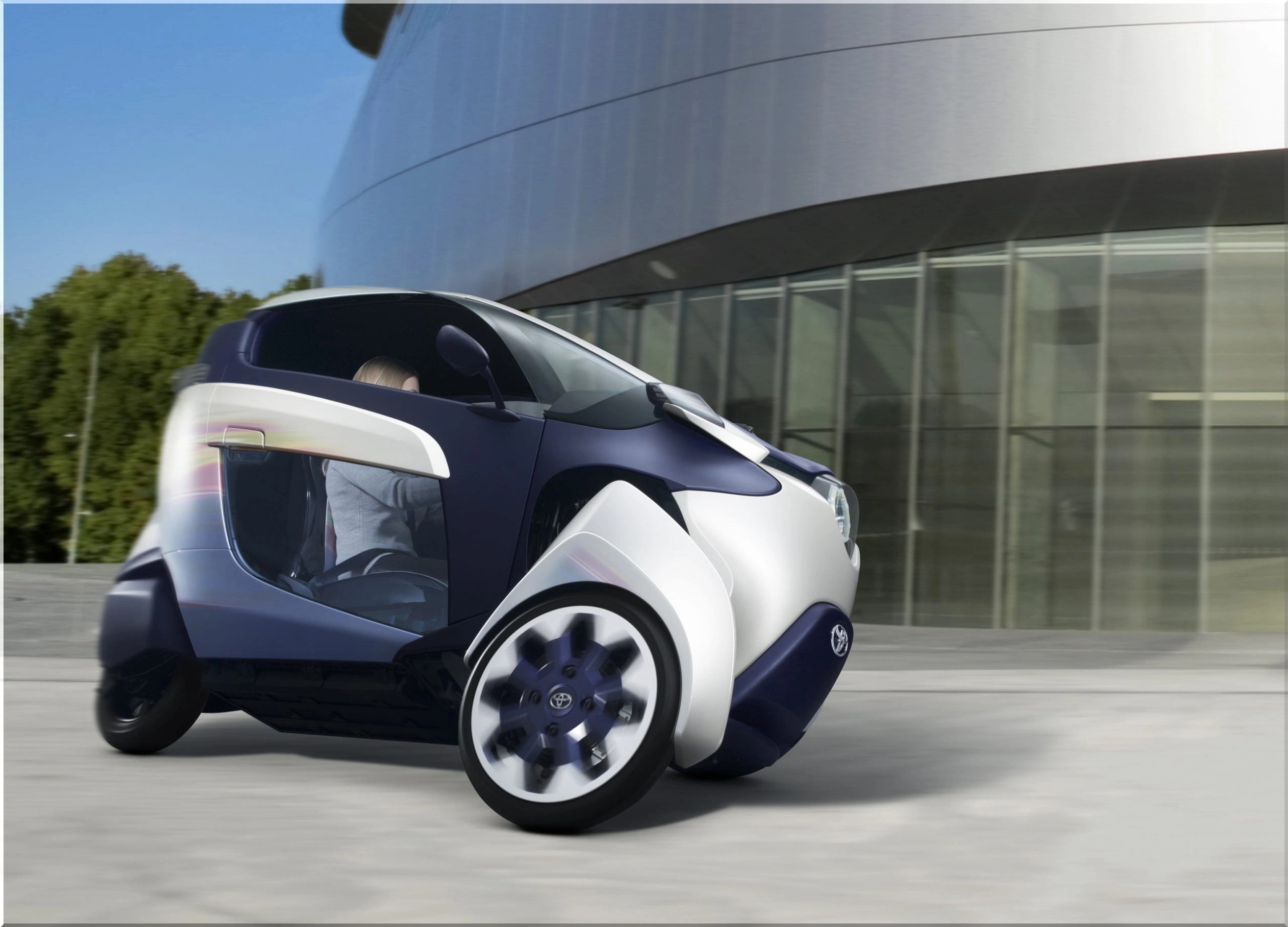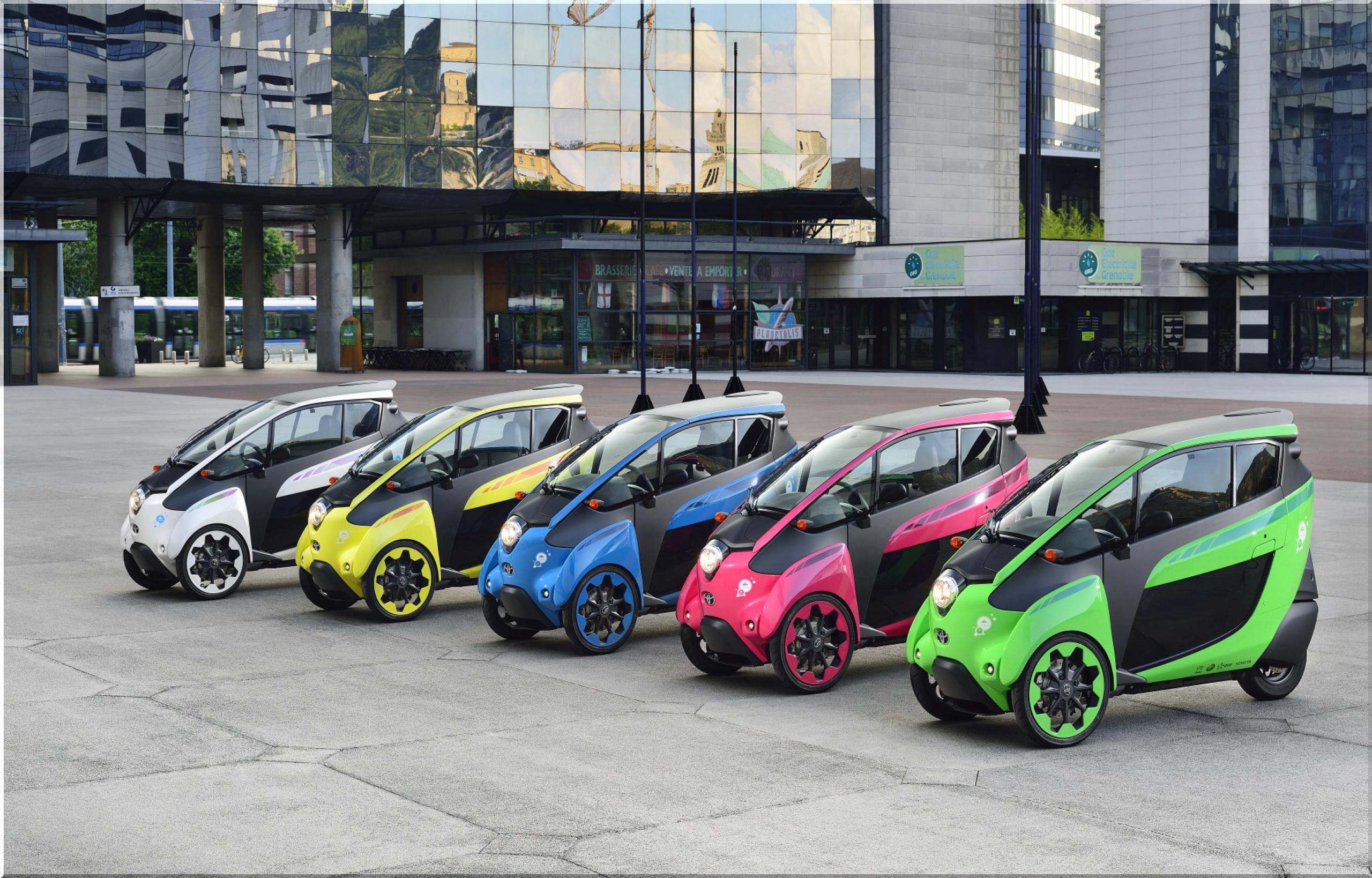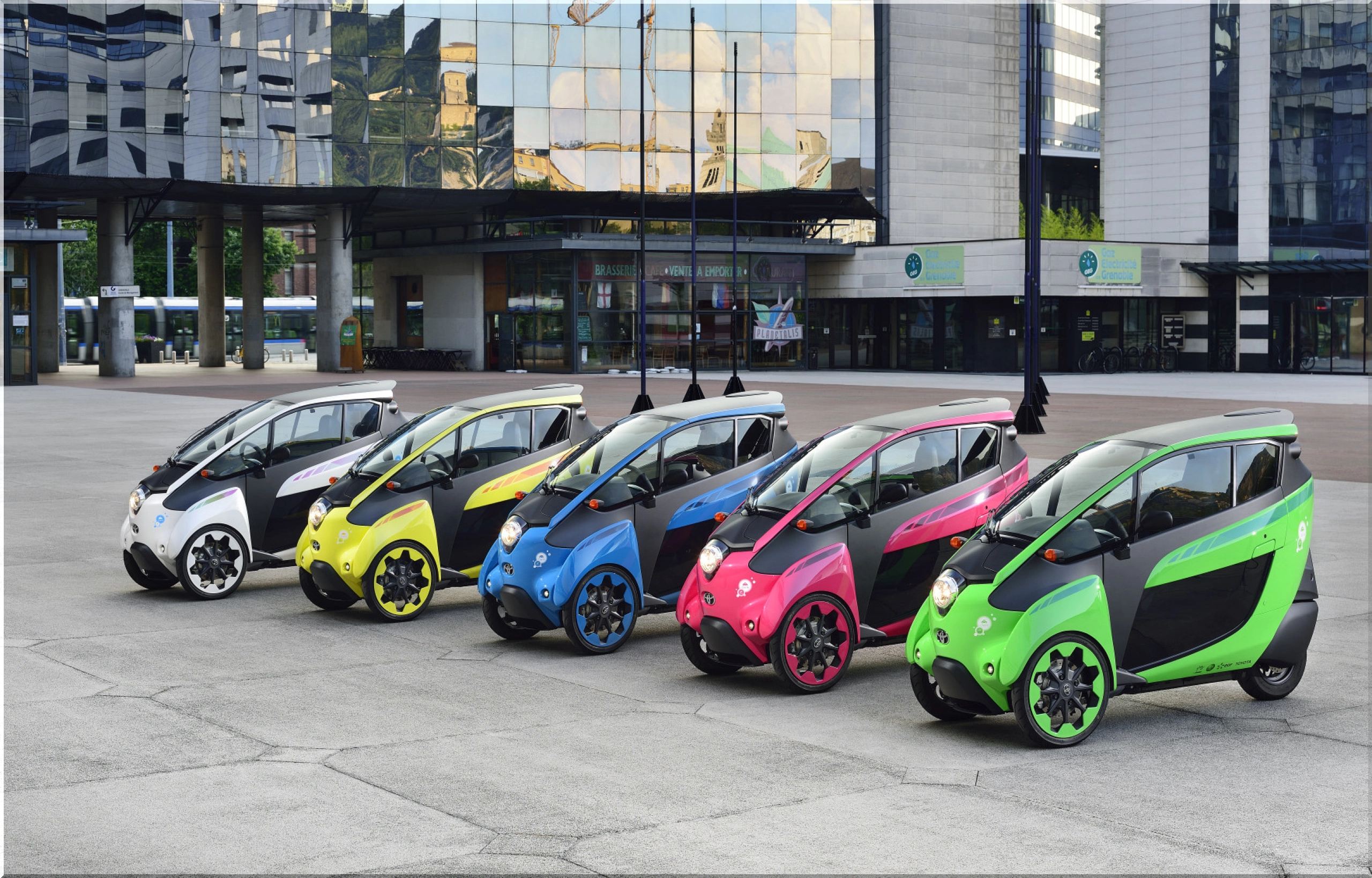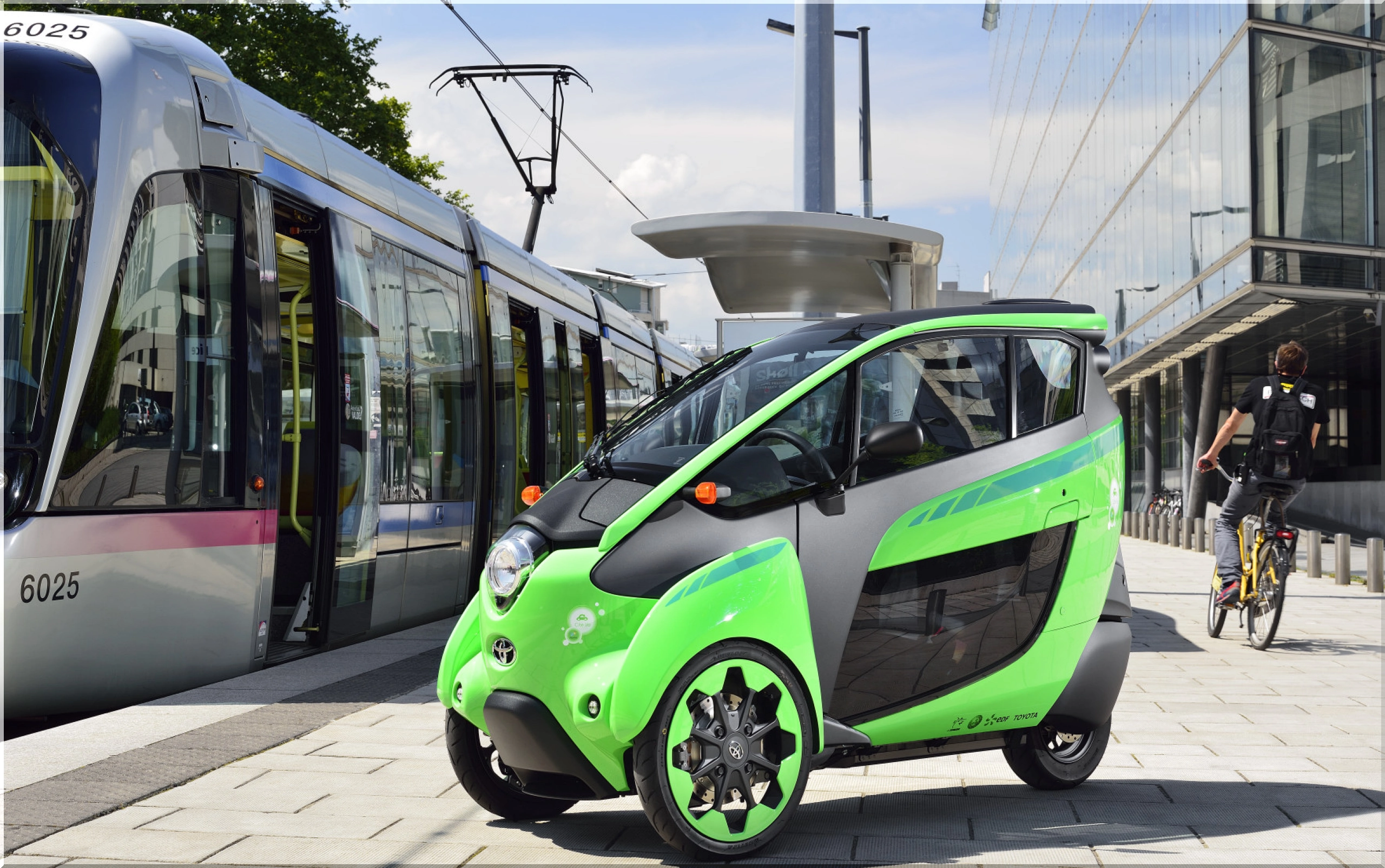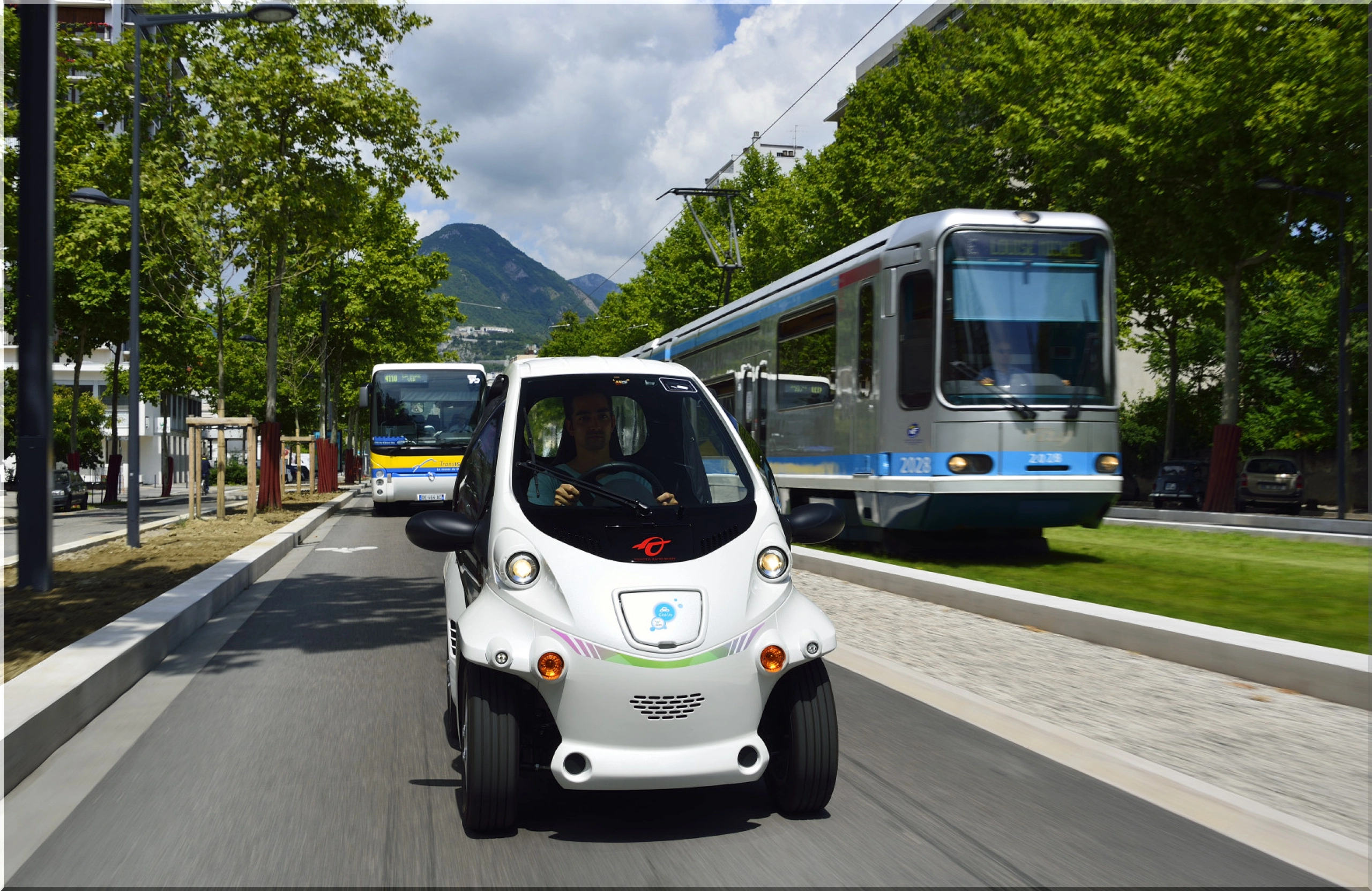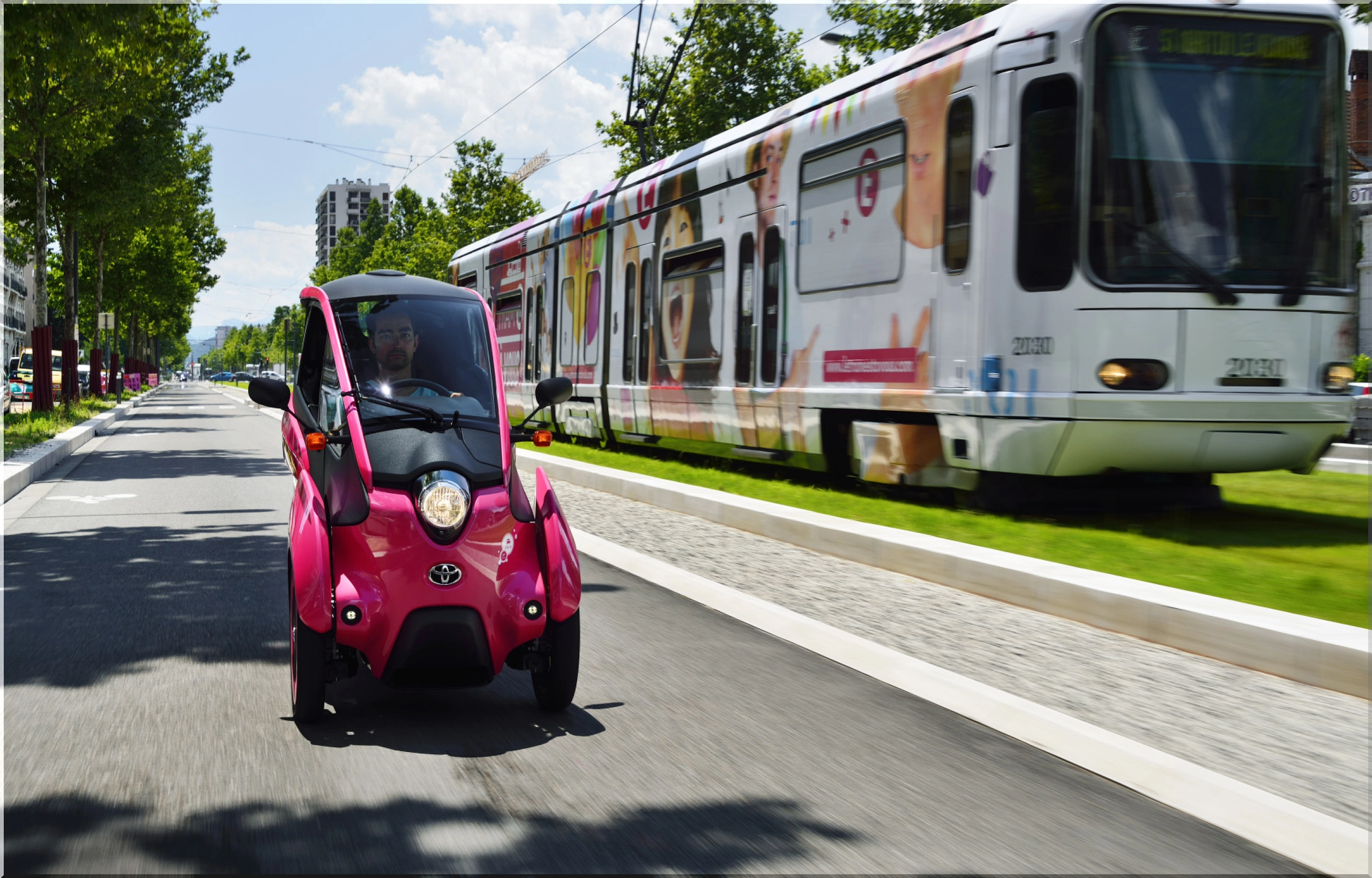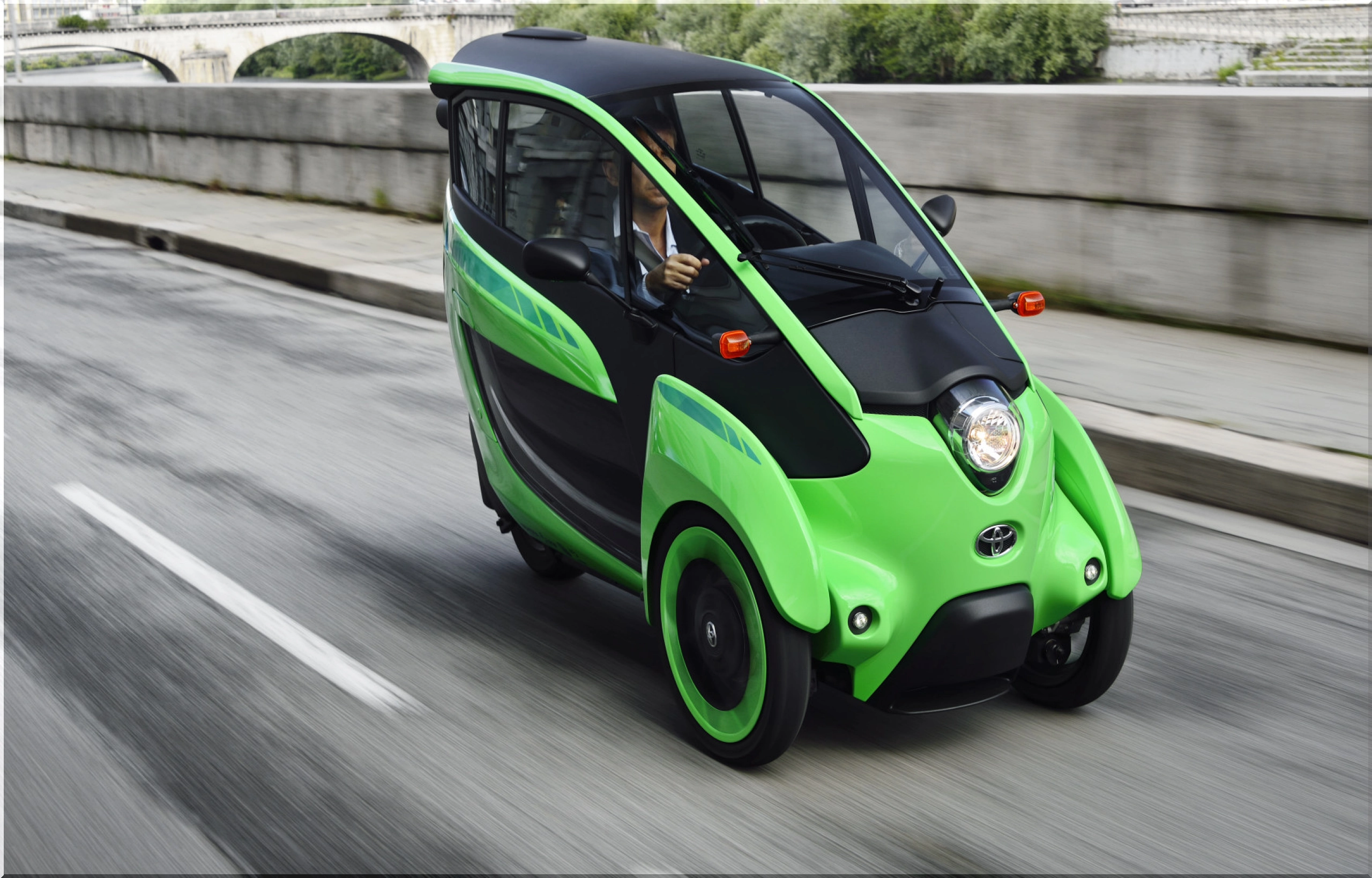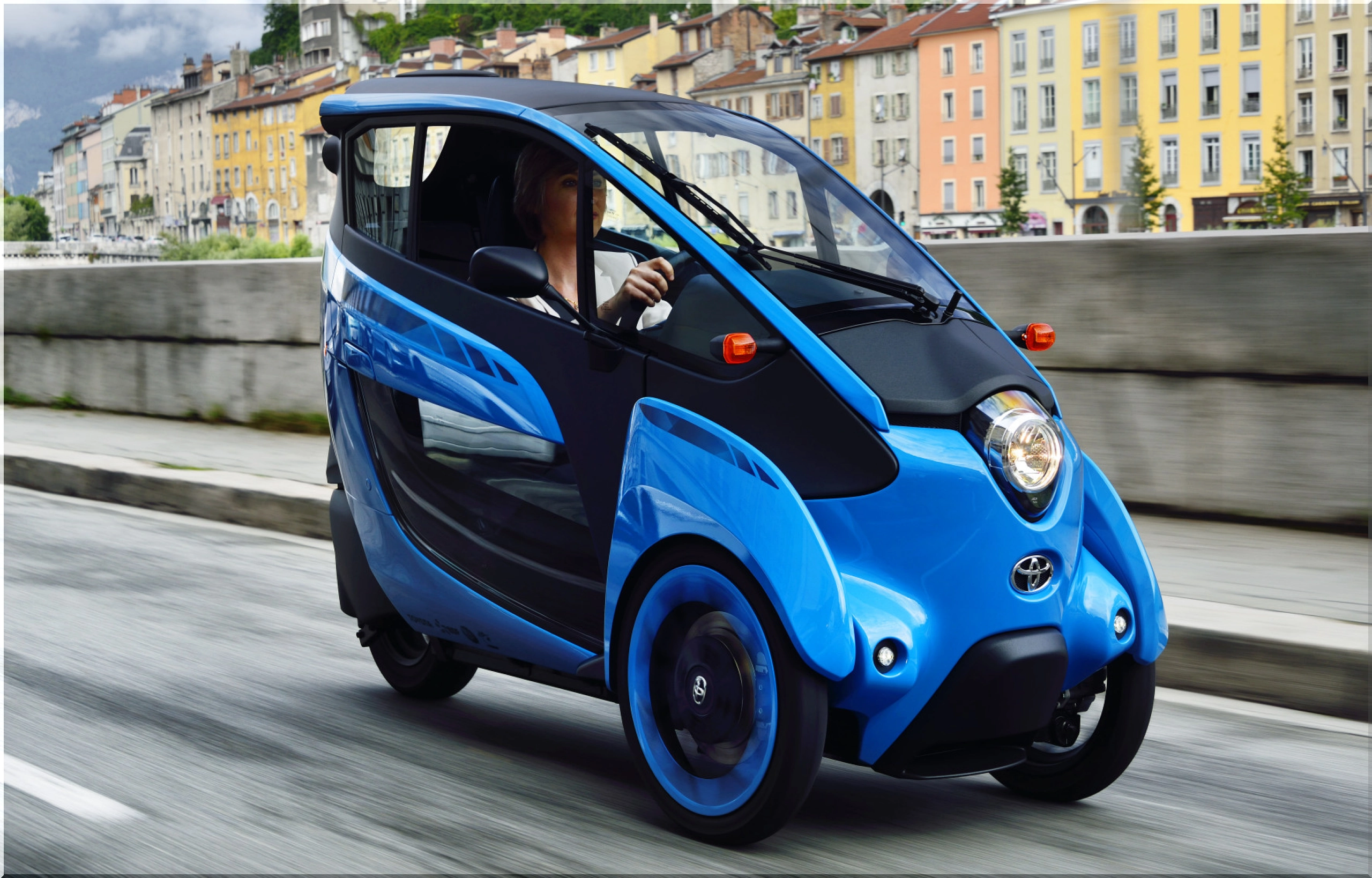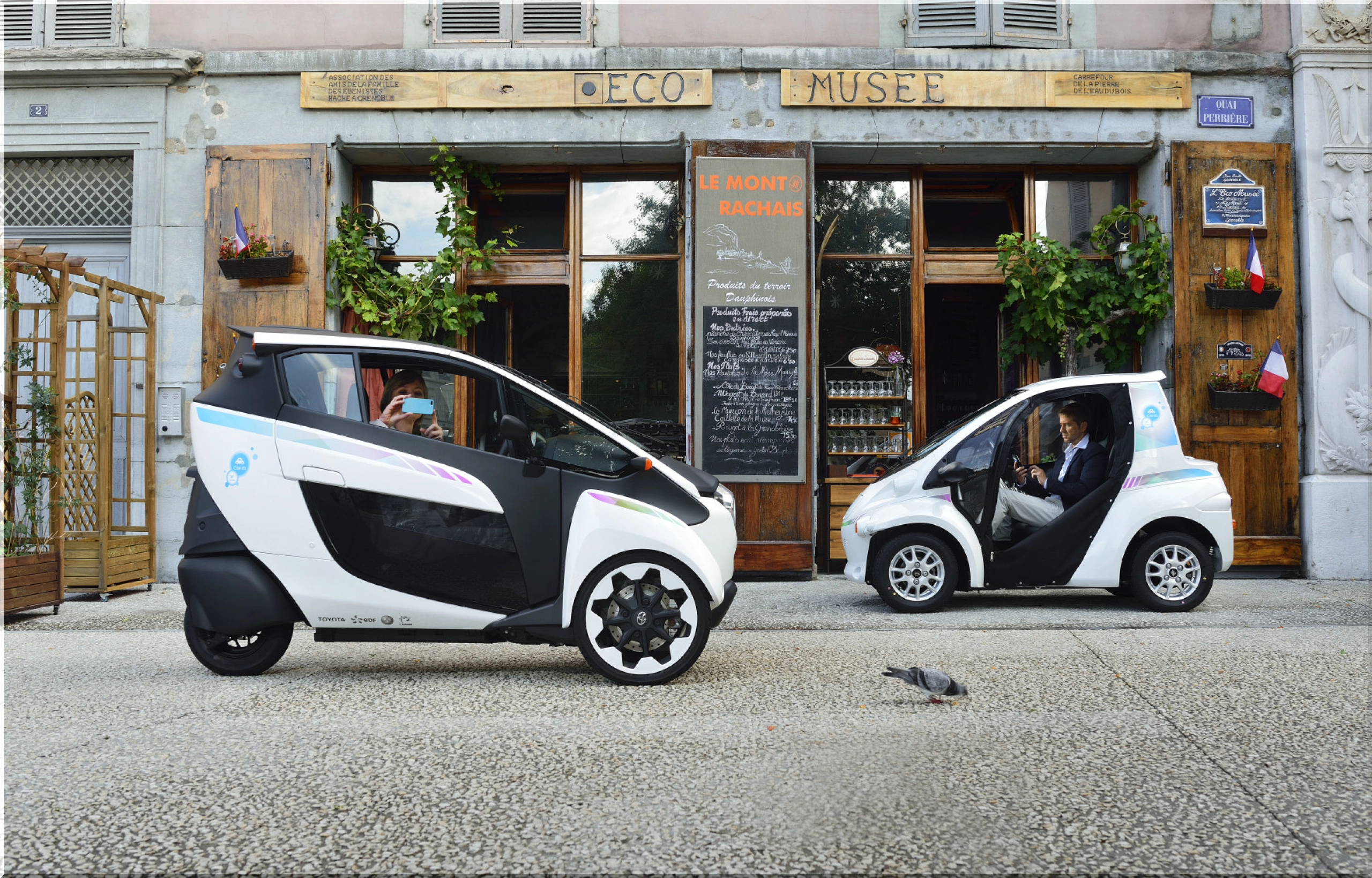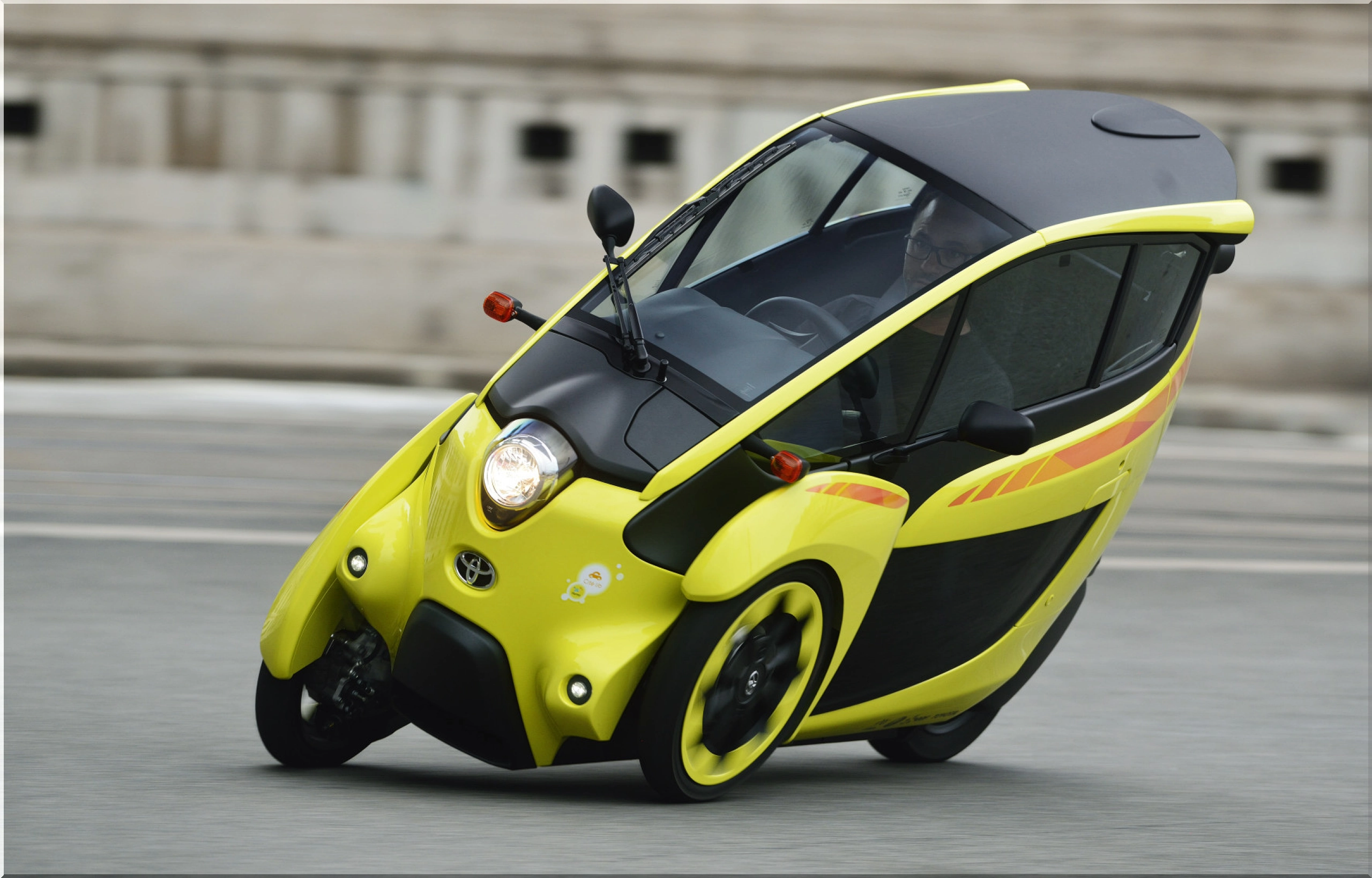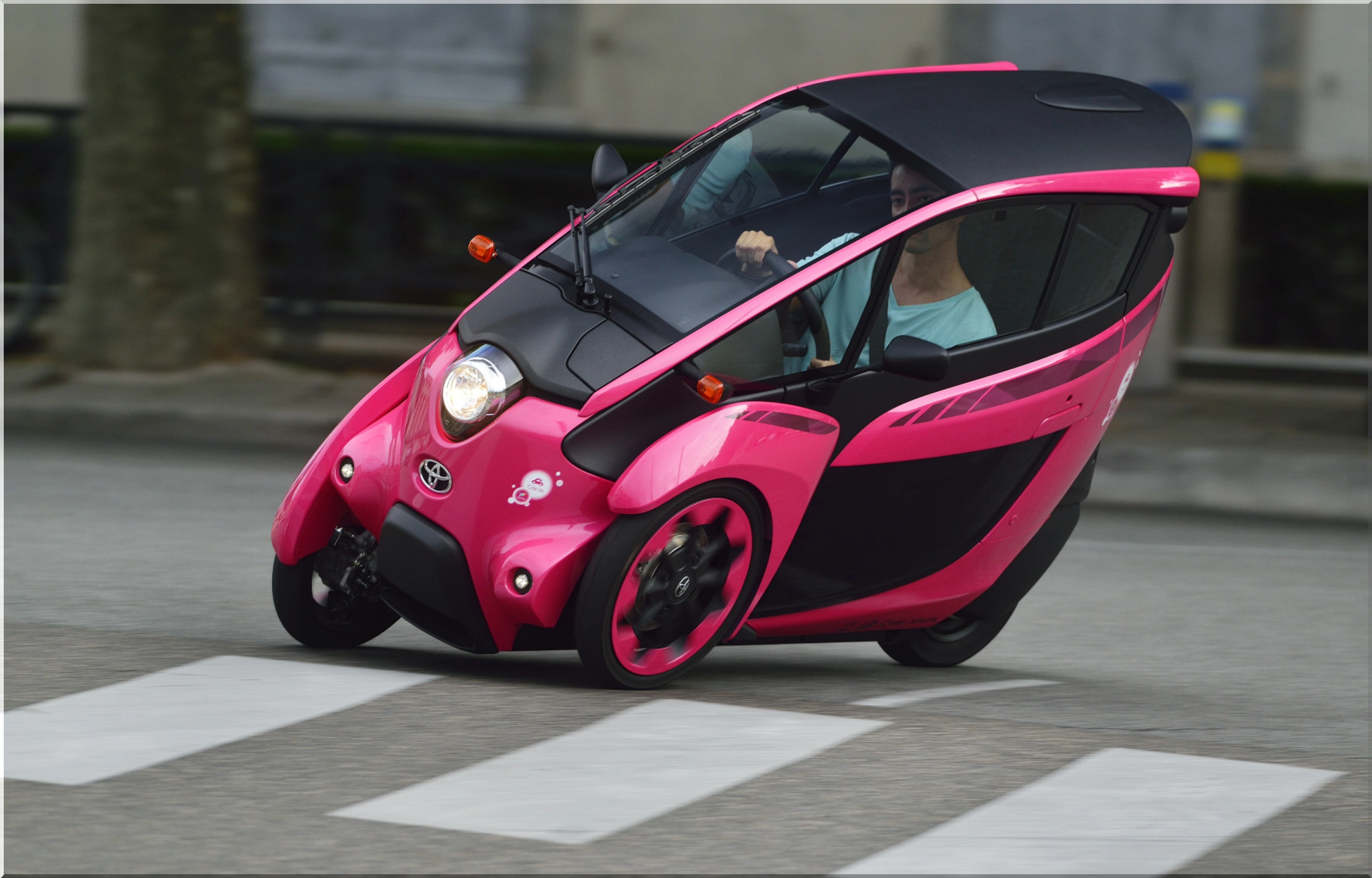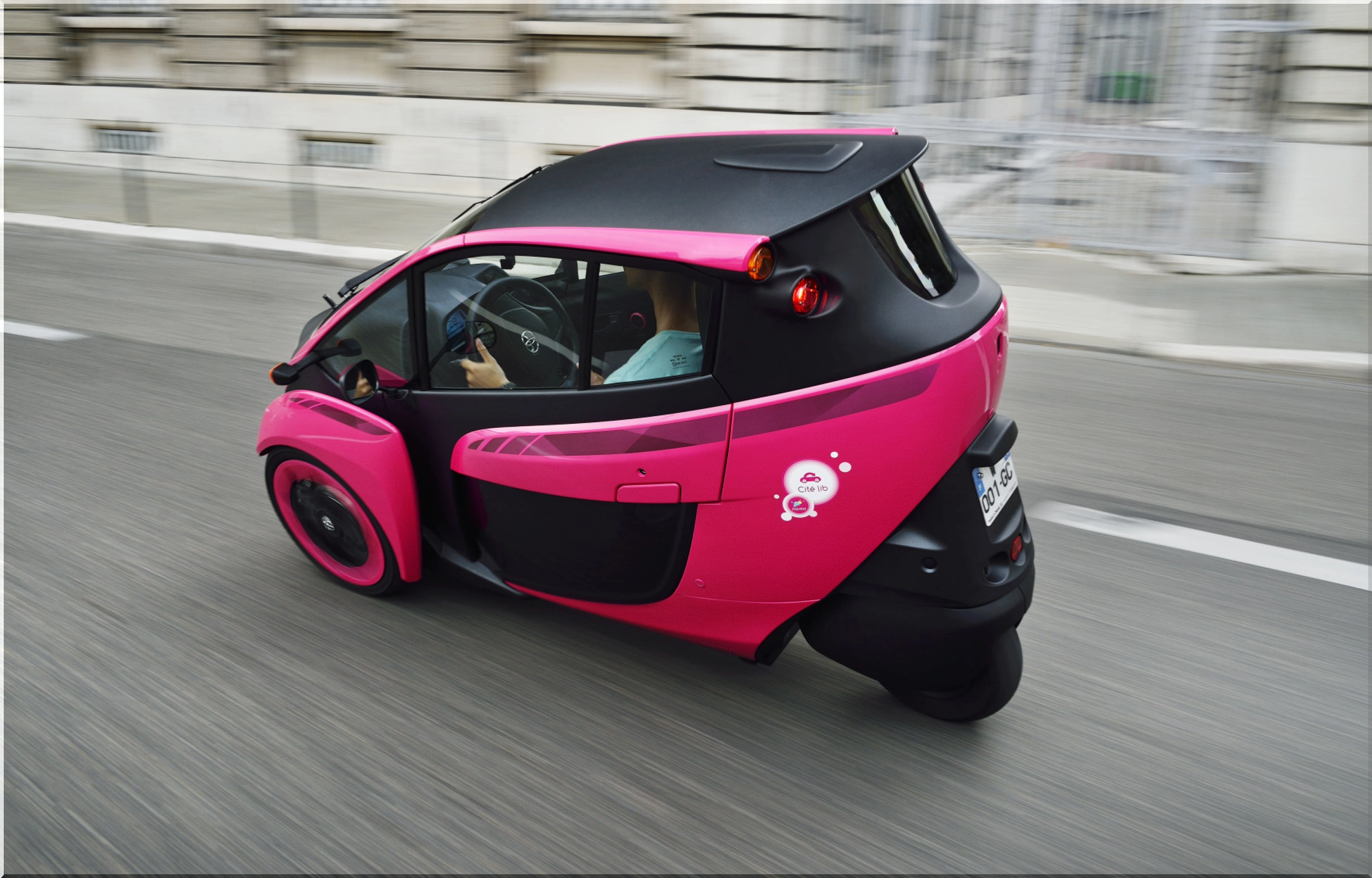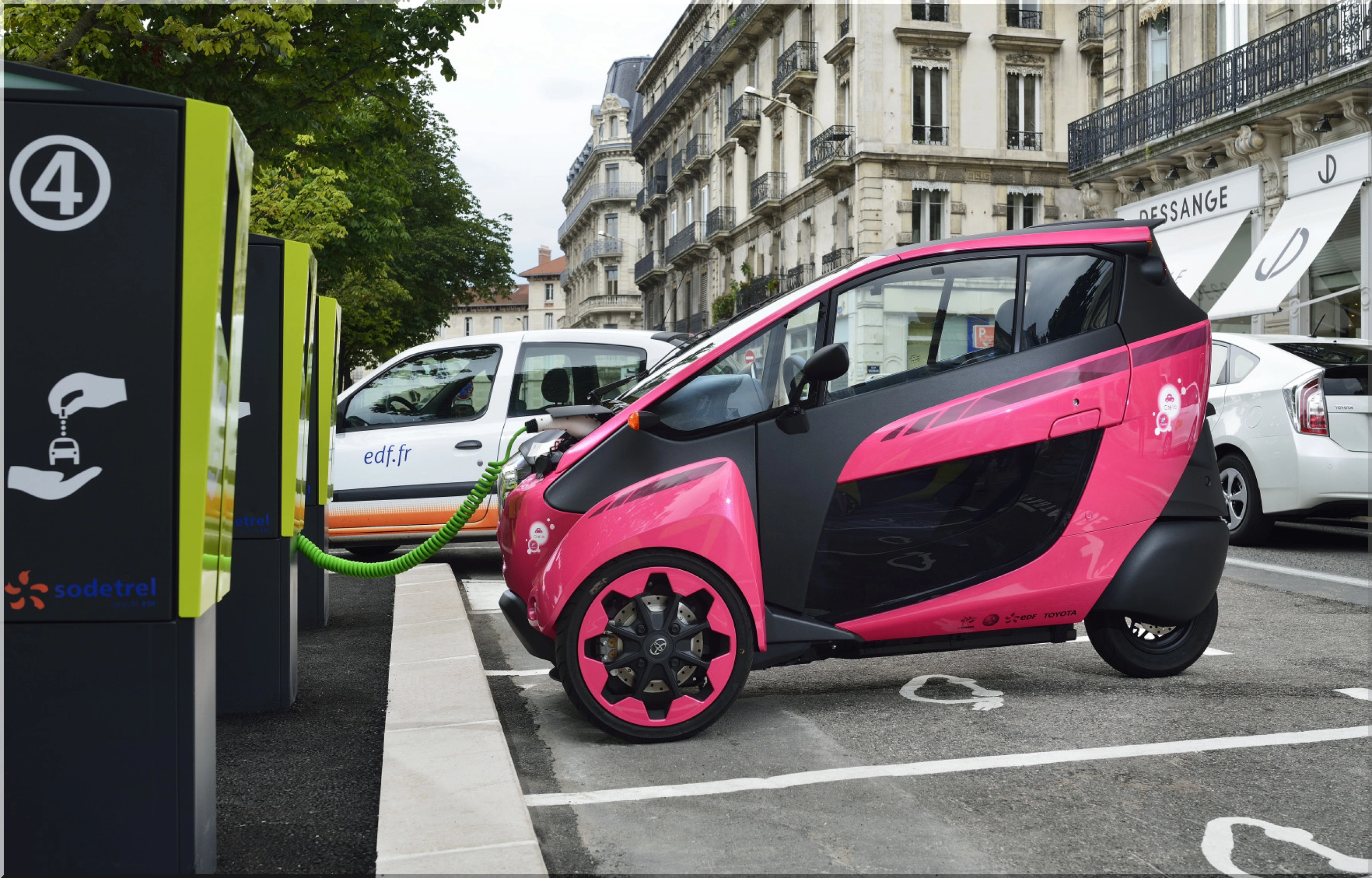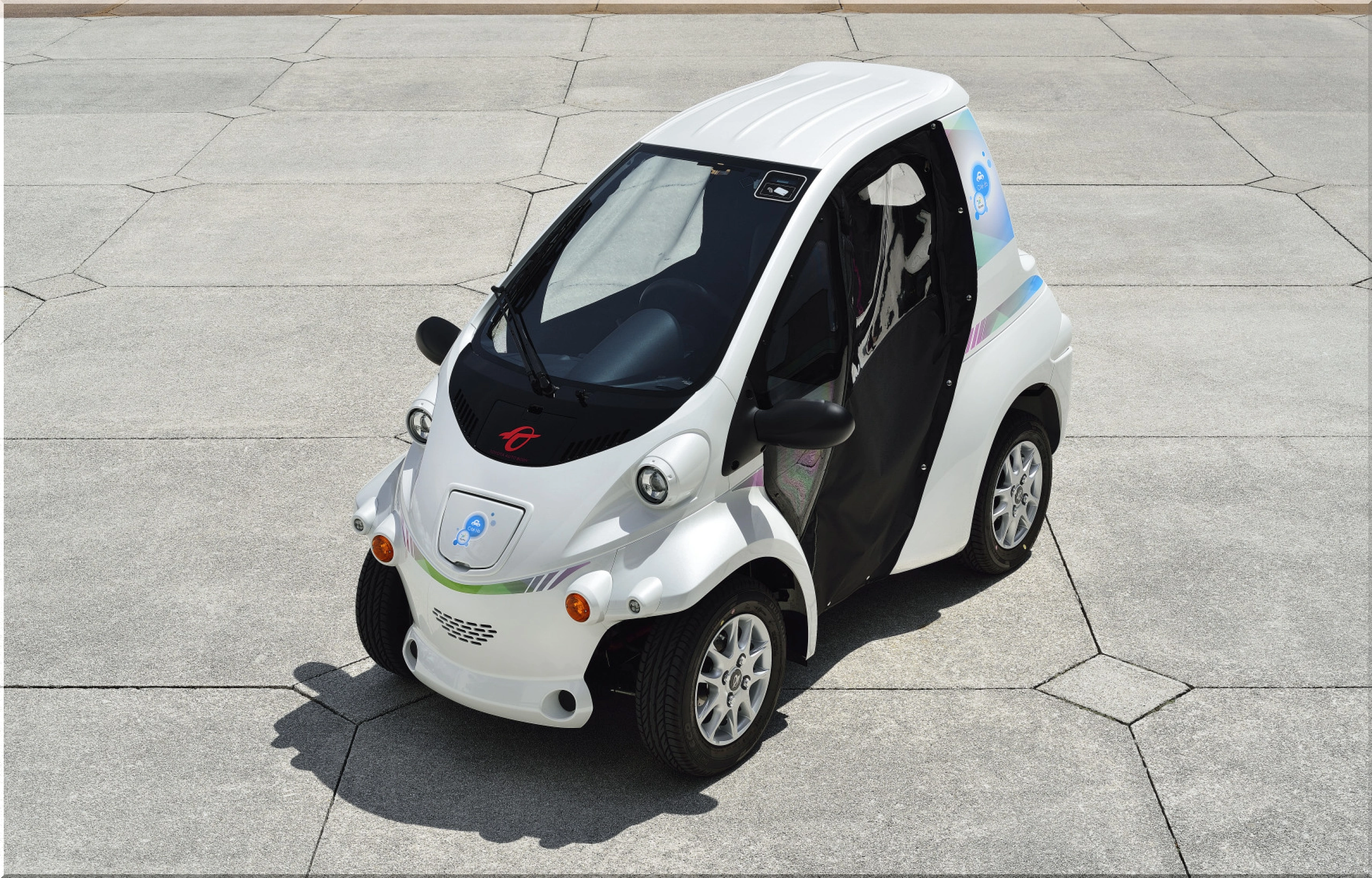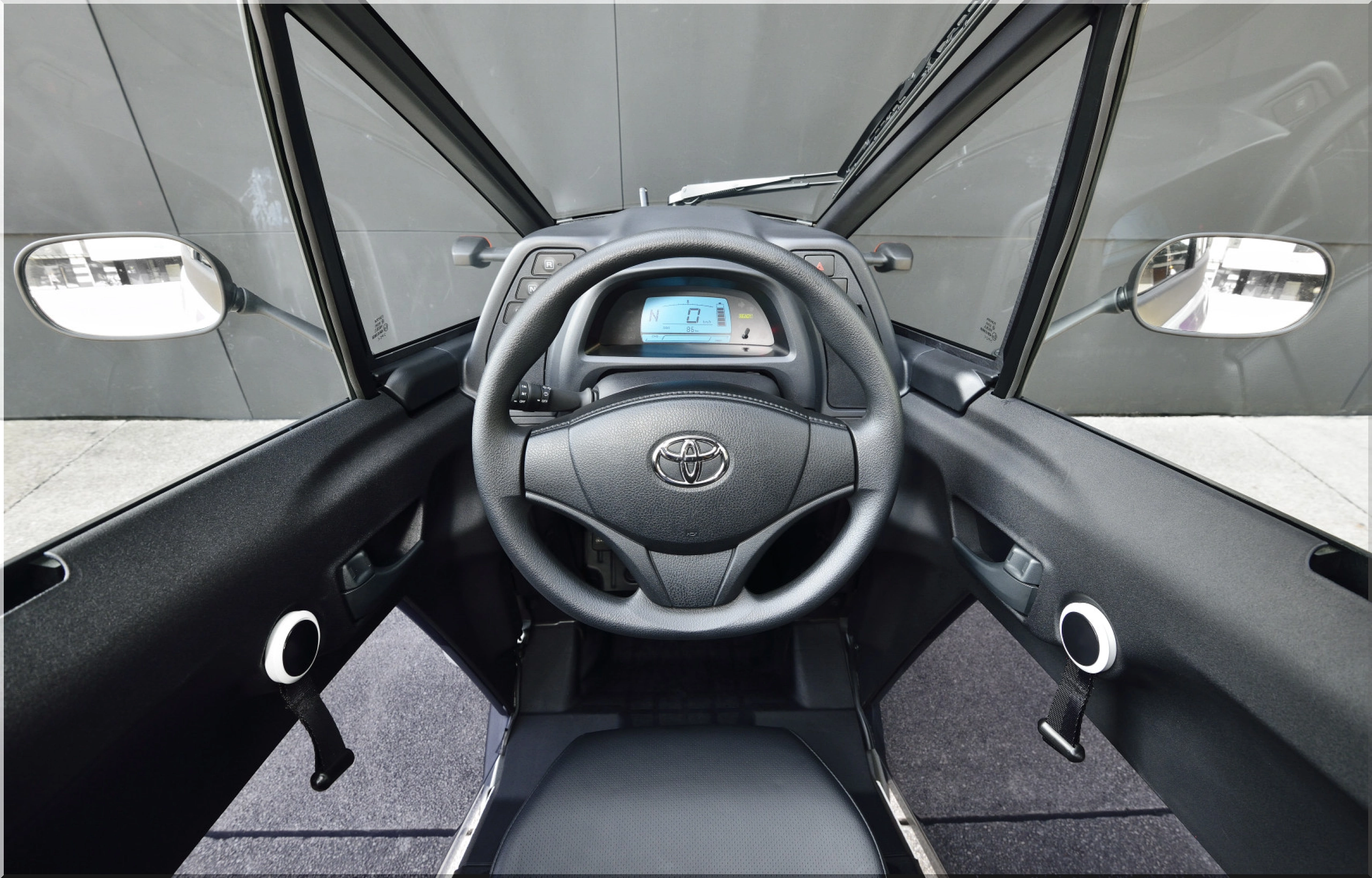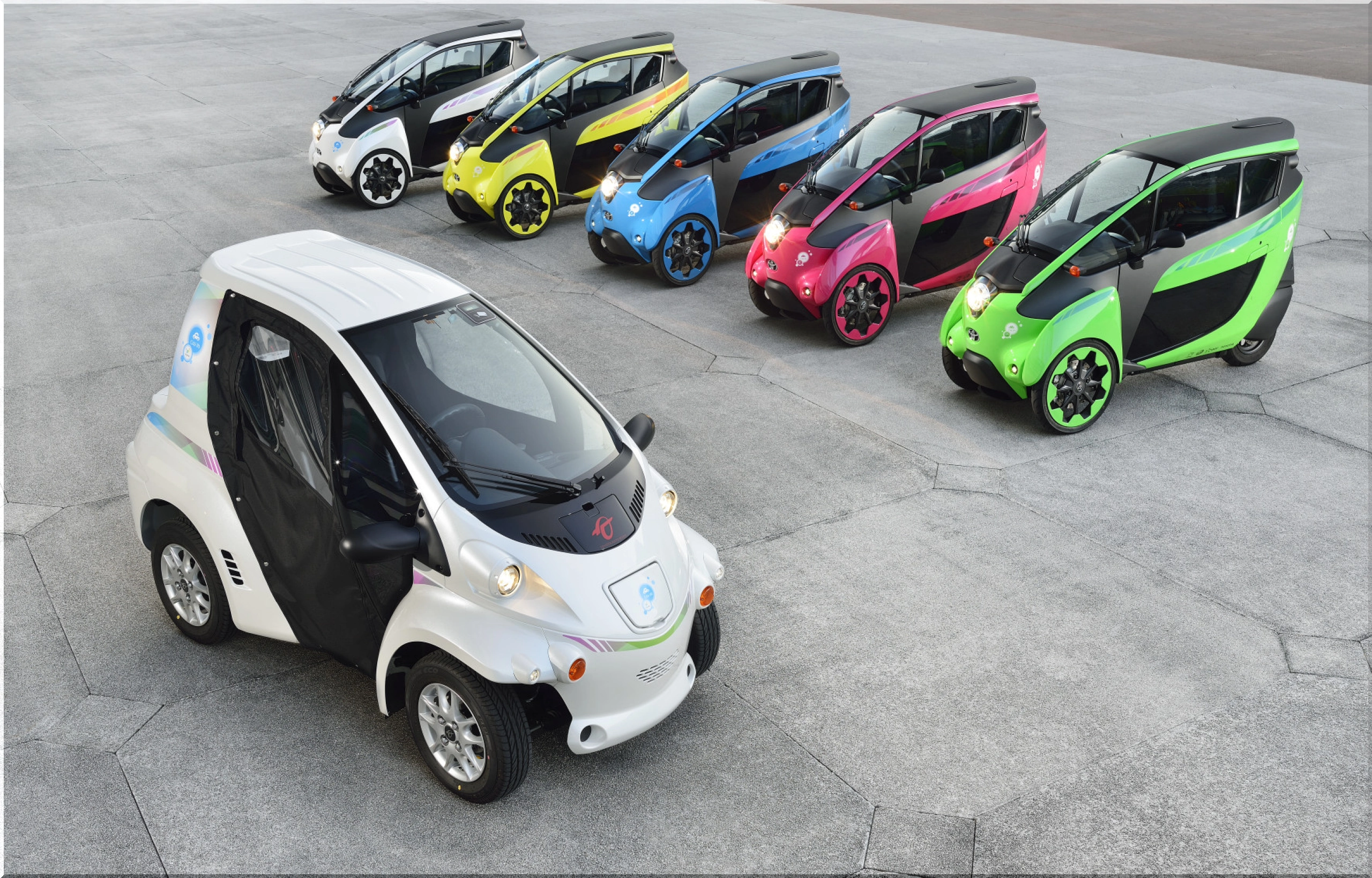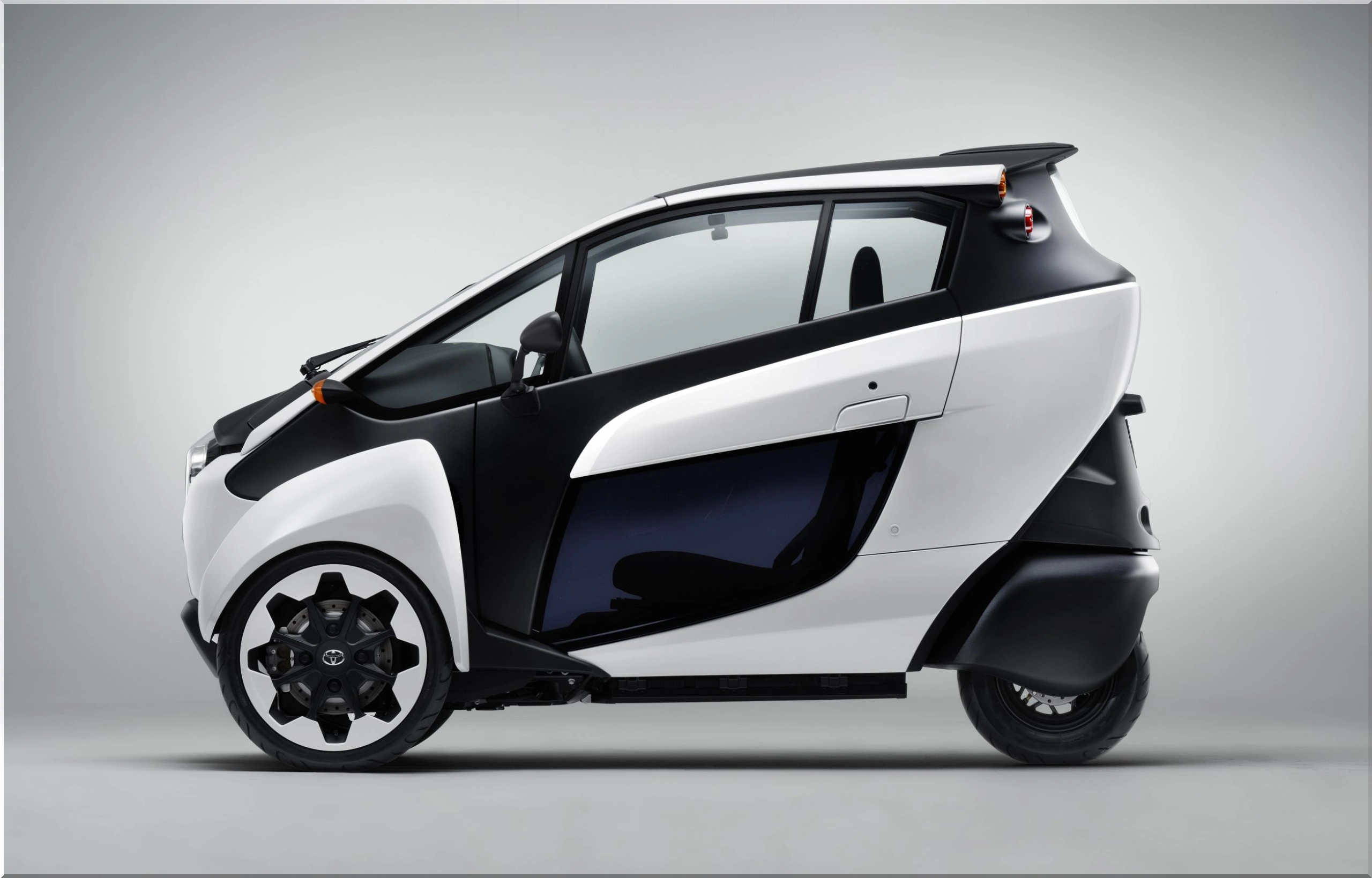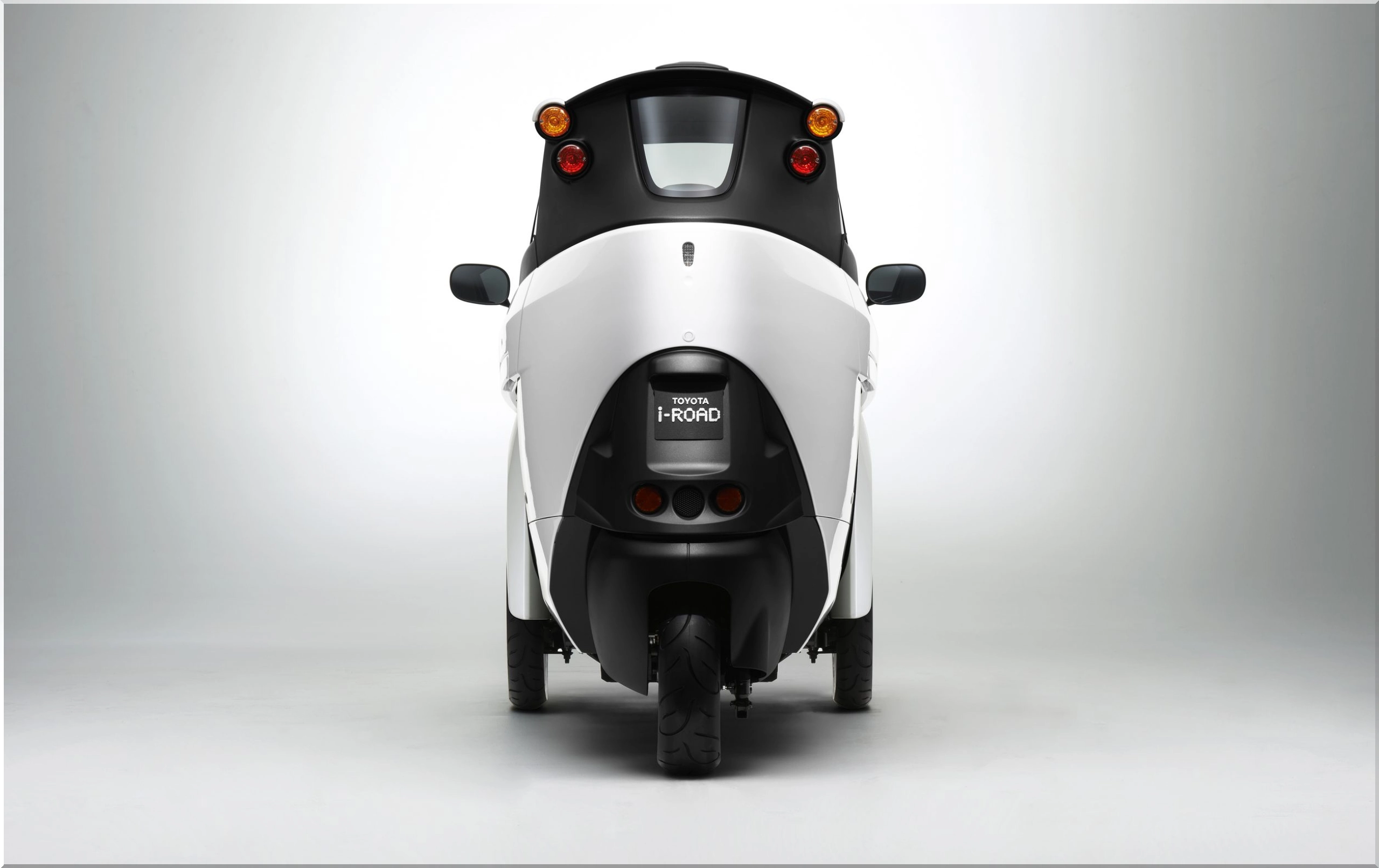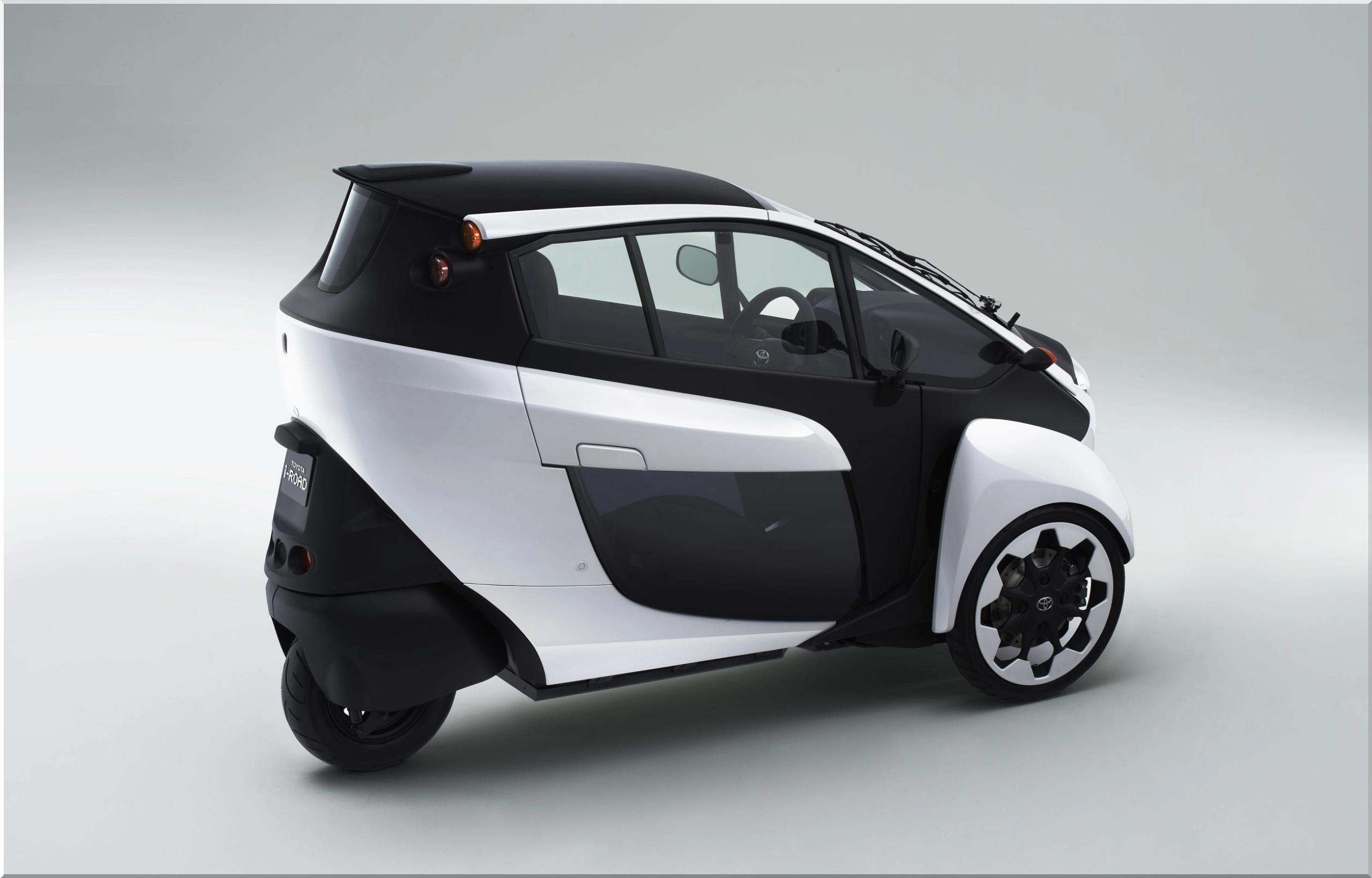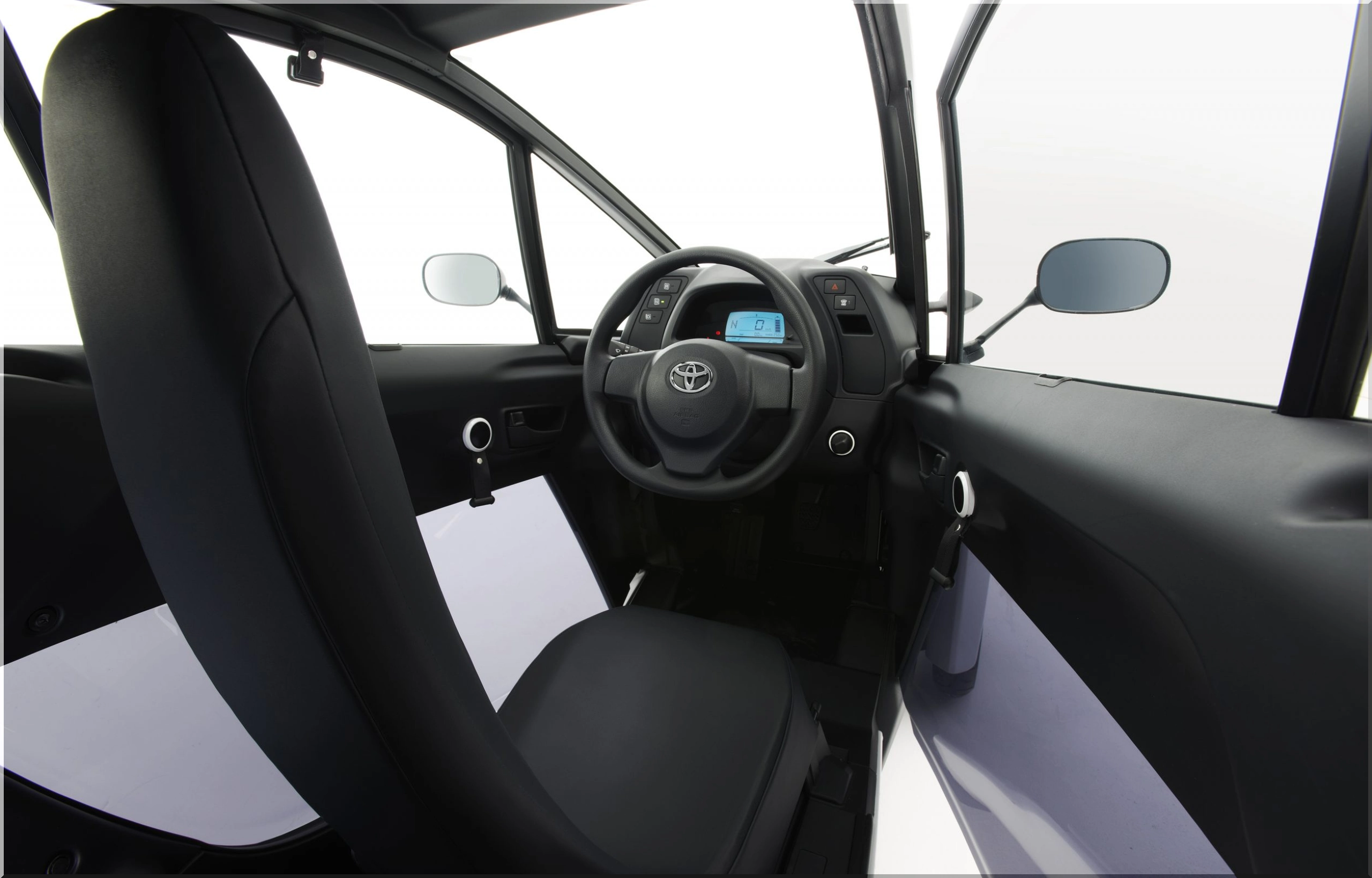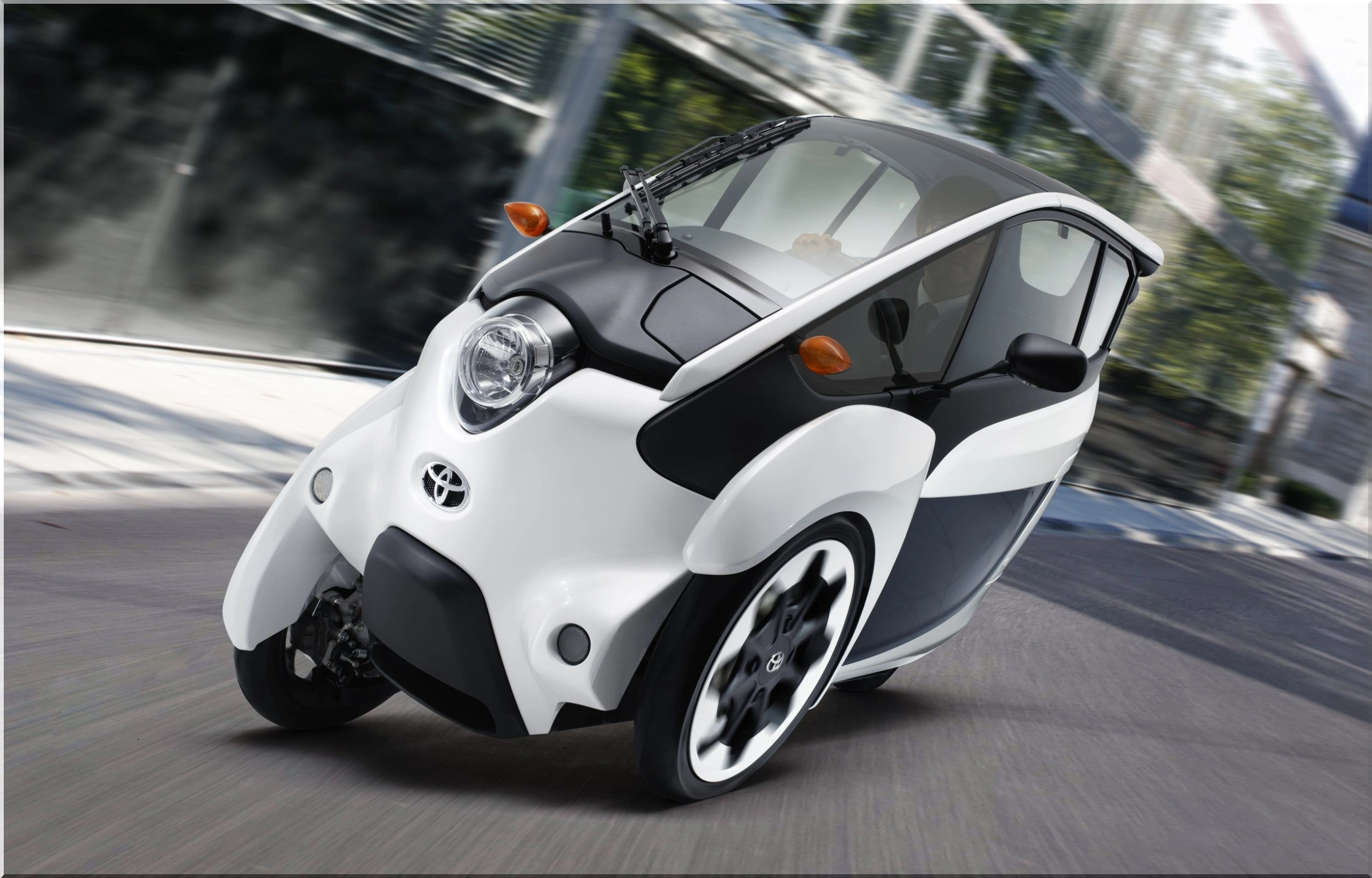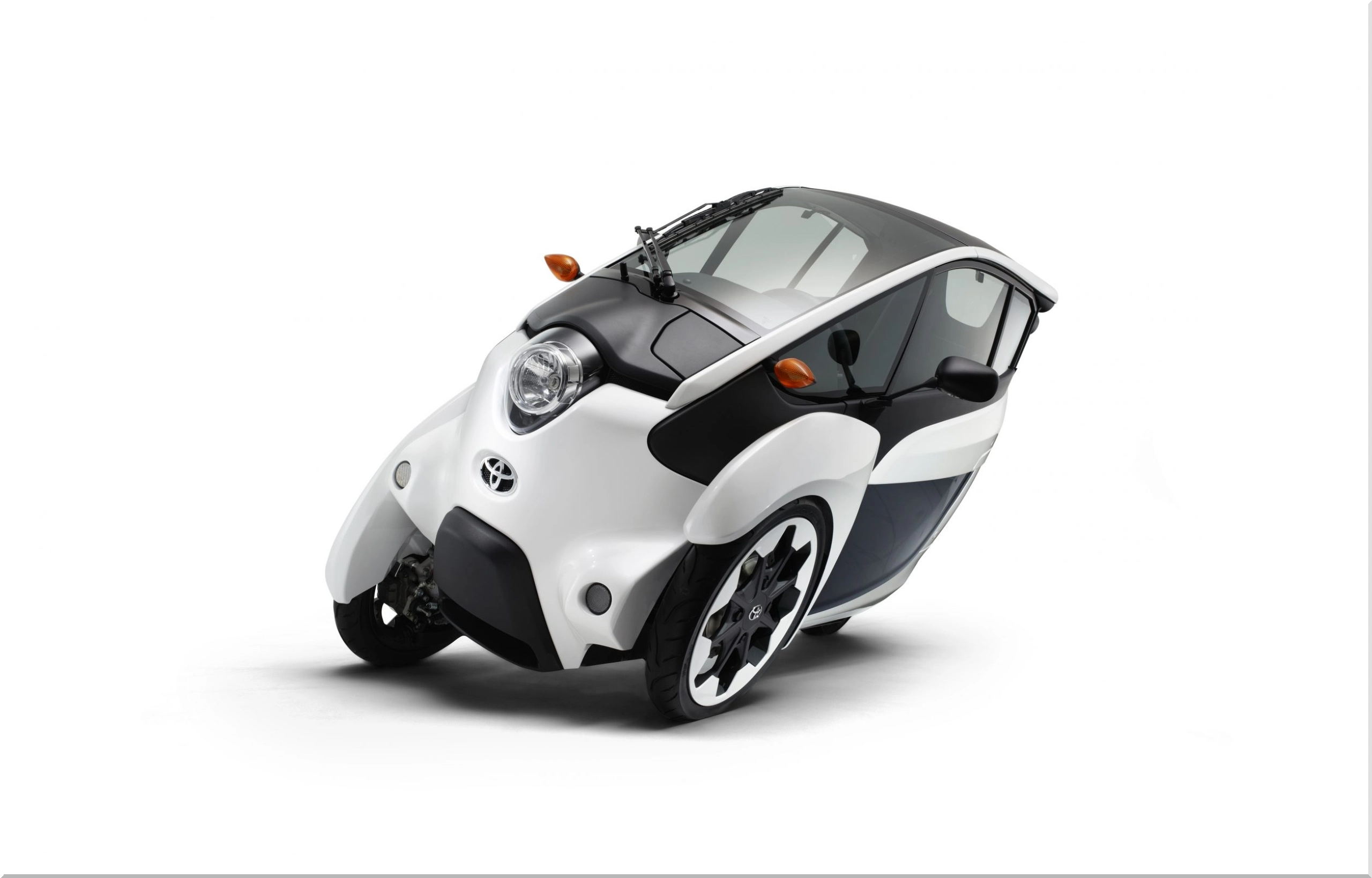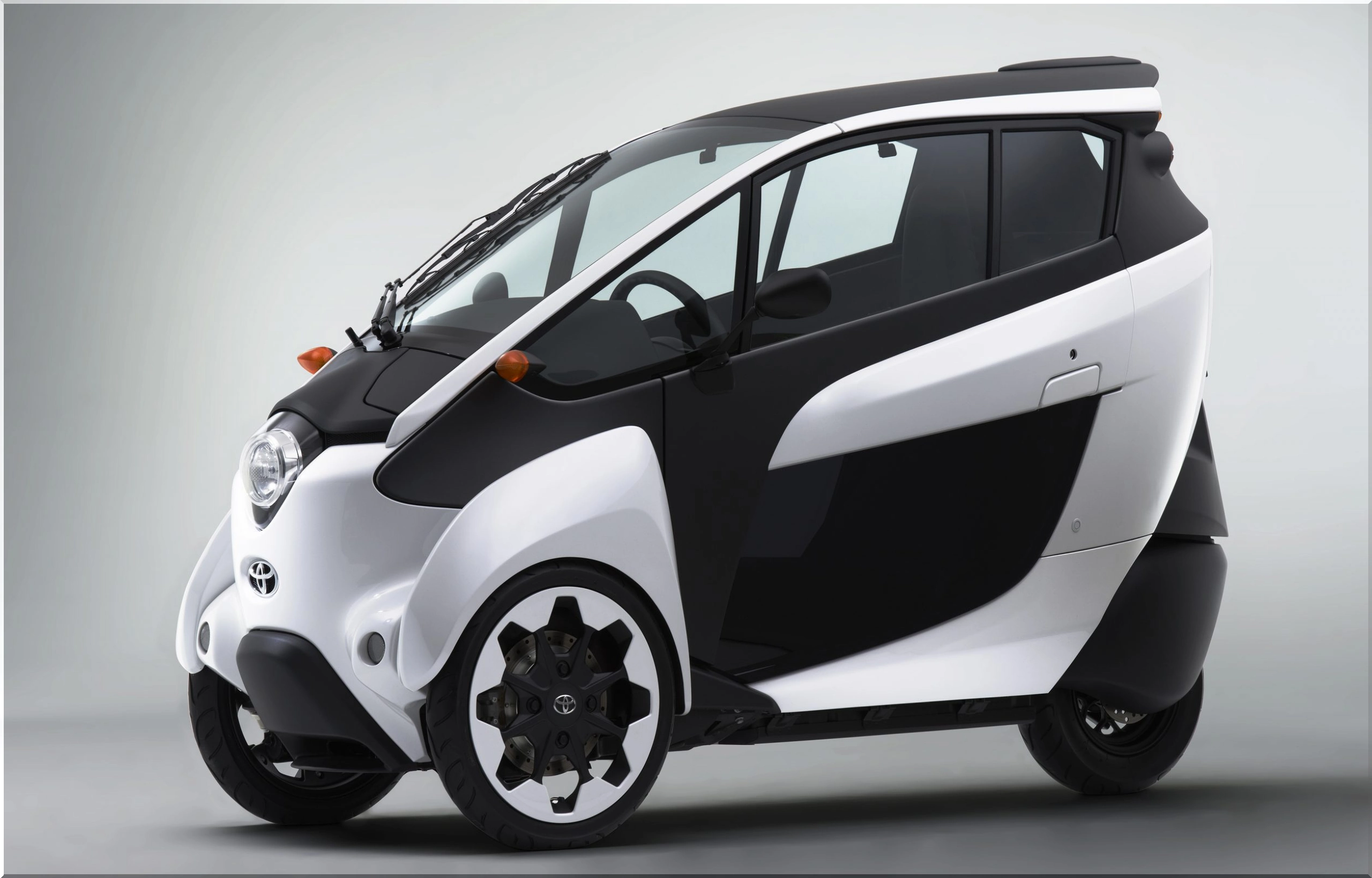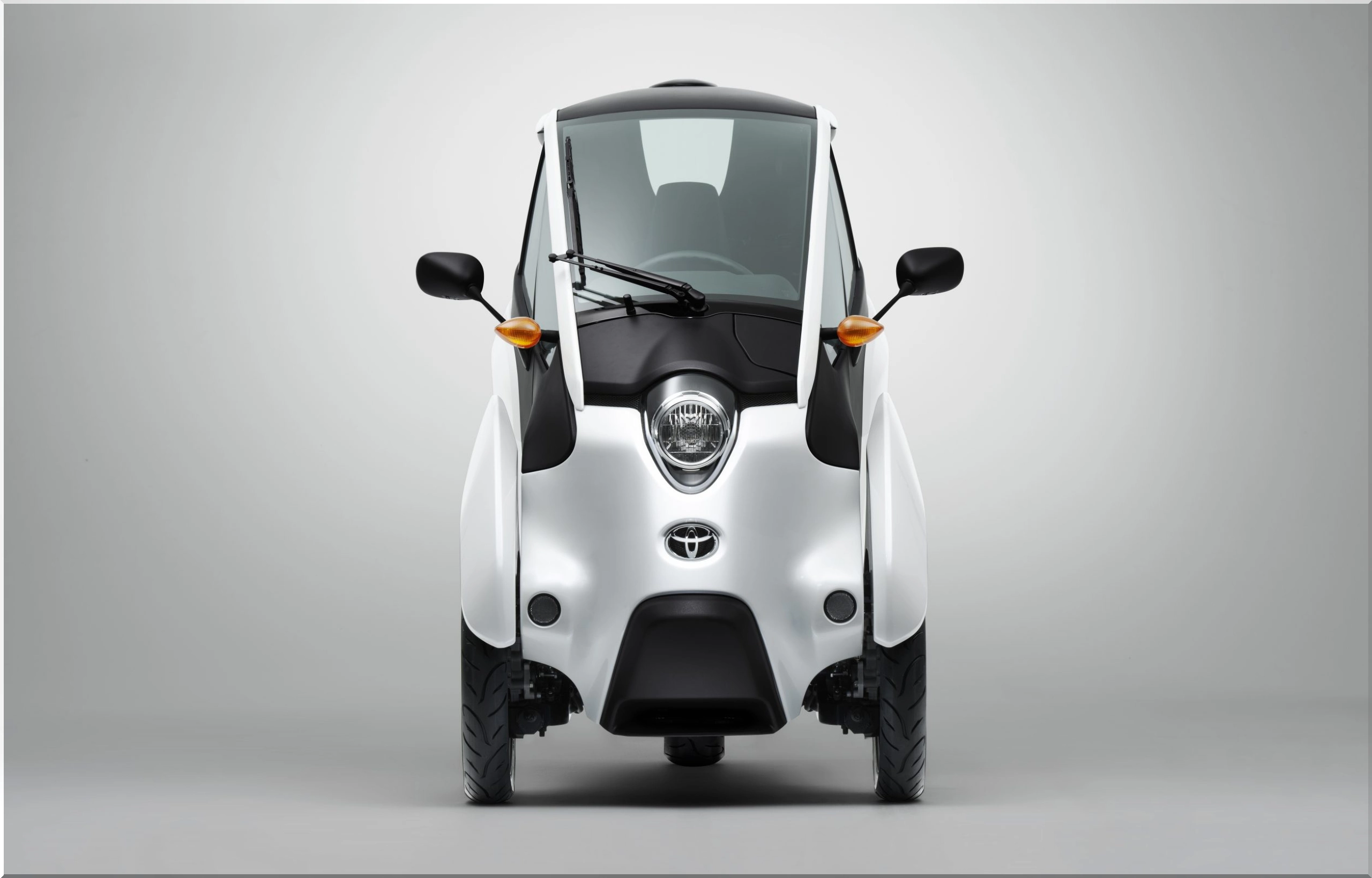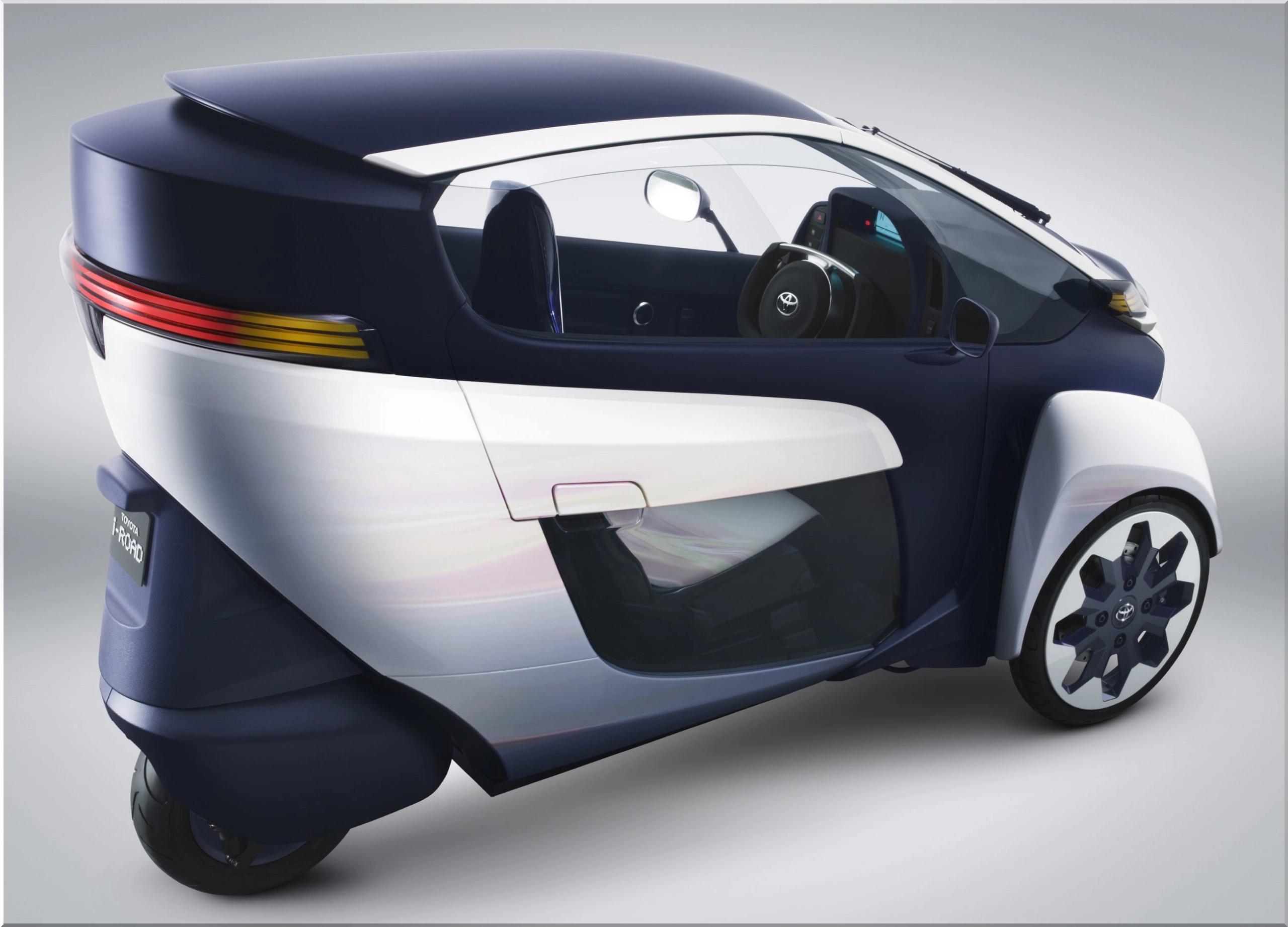
The Toyota i-ROAD packages an enclosed cabin into a vehicle roughly as wide as a motorcycle. Toyota introduced the three-wheeled electric vehicle in 2013, then developed it through public-road and car-sharing trials. Its defining feature, Active Lean technology, automatically tilts the body through corners while the driver steers.
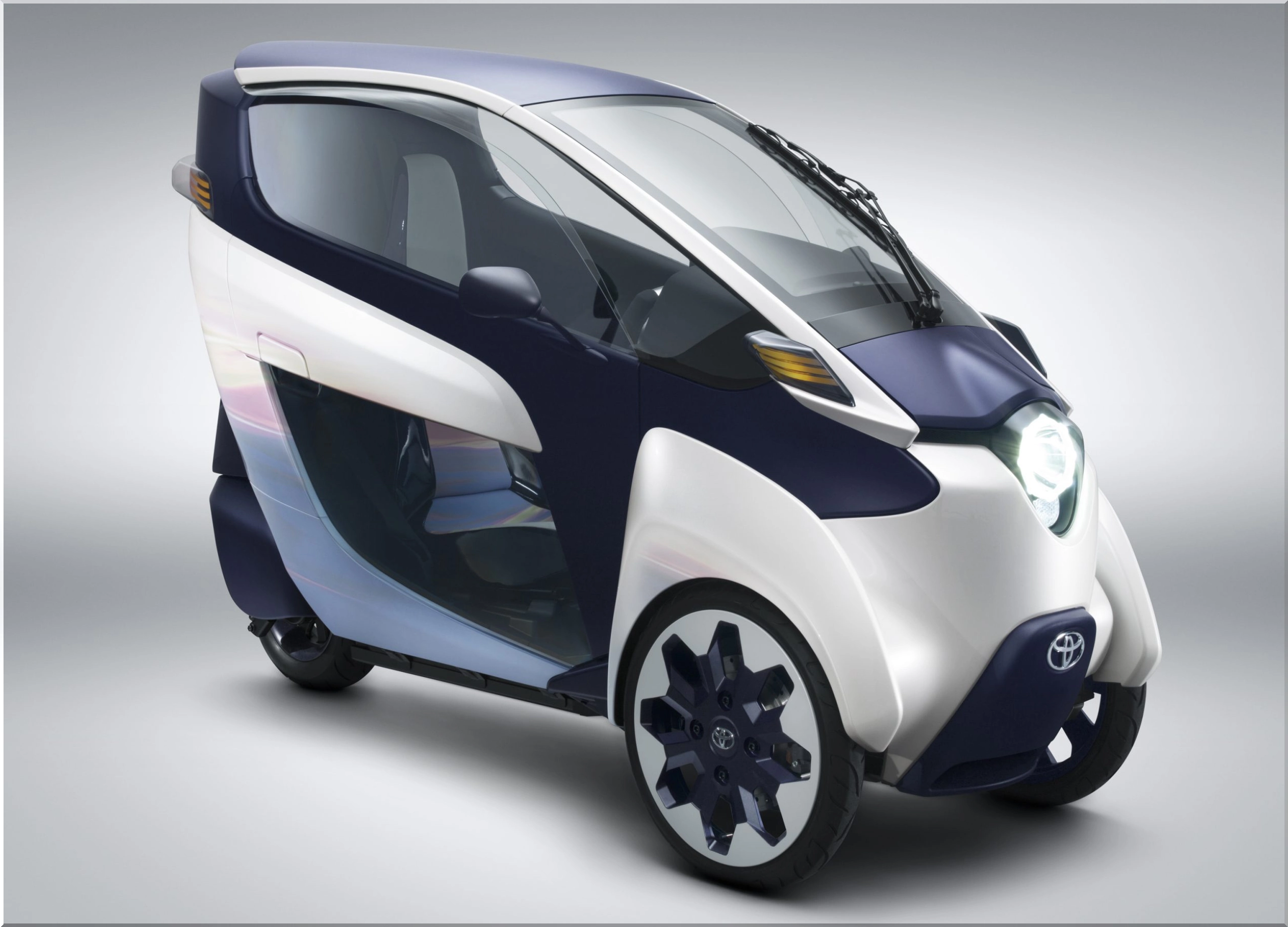
Toyota i-ROAD Dimensions: Concept vs Tokyo Test Vehicle
Toyota revised the dimensions before launching Japanese consumer trials. The table compares the 2013 concept with the 2014 Tokyo test vehicle; the 2015 Park24 version retained the latter's external dimensions.
| Dimension | 2013 concept | 2014 Tokyo test vehicle |
|---|---|---|
| Length | 2,350 mm / 92.5 in | 2,345 mm / 92.3 in |
| Width | 850 mm / 33.5 in | 870 mm / 34.3 in |
| Height | 1,445 mm / 56.9 in | 1,455 mm / 57.3 in |
| Wheelbase | 1,700 mm / 66.9 in | 1,695 mm / 66.7 in |
How Does Active Lean Technology Work?
The driver turns the steering wheel. Specifically, an electronic controller uses steering angle, vehicle speed and gyro-sensor data to determine the required lean. An actuator and gearing move the front wheels vertically in opposite directions, tilting the cabin into the bend to counter cornering forces.
The system also handles two everyday tasks:
- Compensating for stepped road surfaces to keep the body level.
- Maintaining balance during low-speed maneuvering and stops, keeping the driver's feet inside.