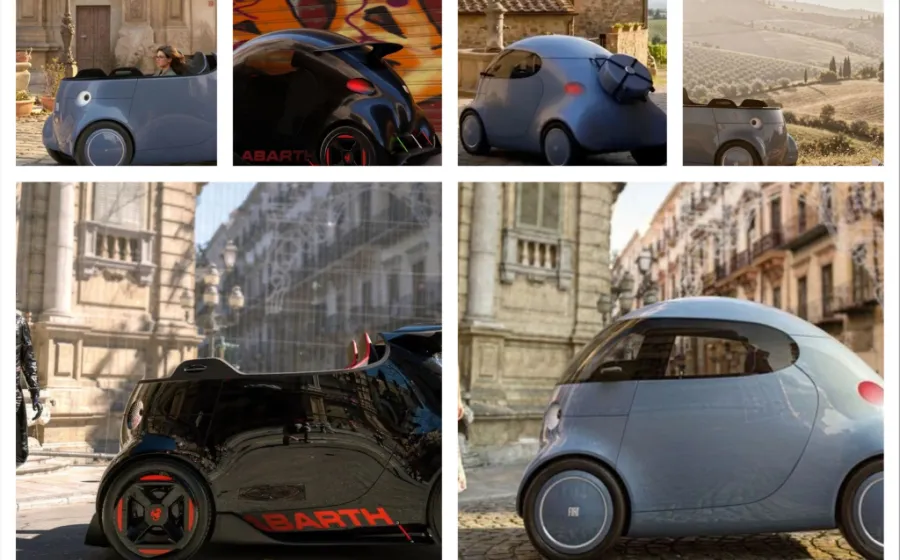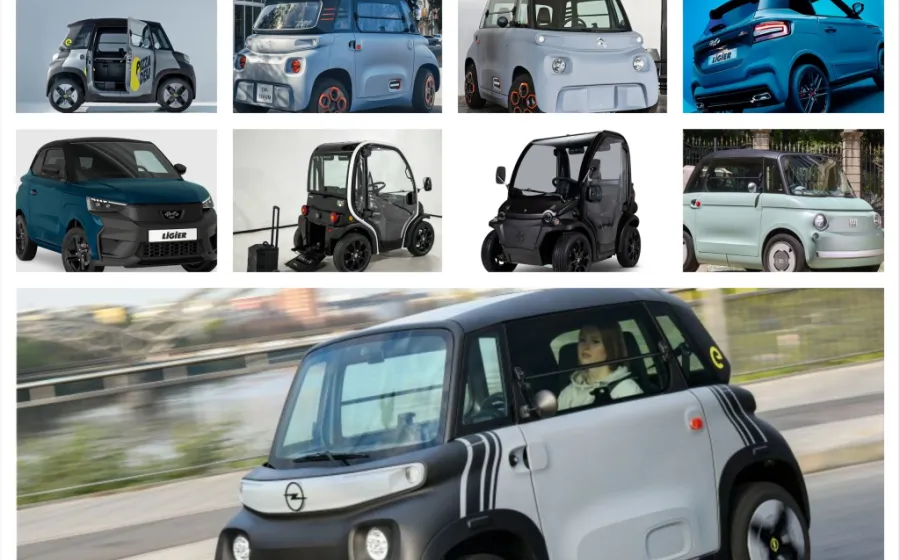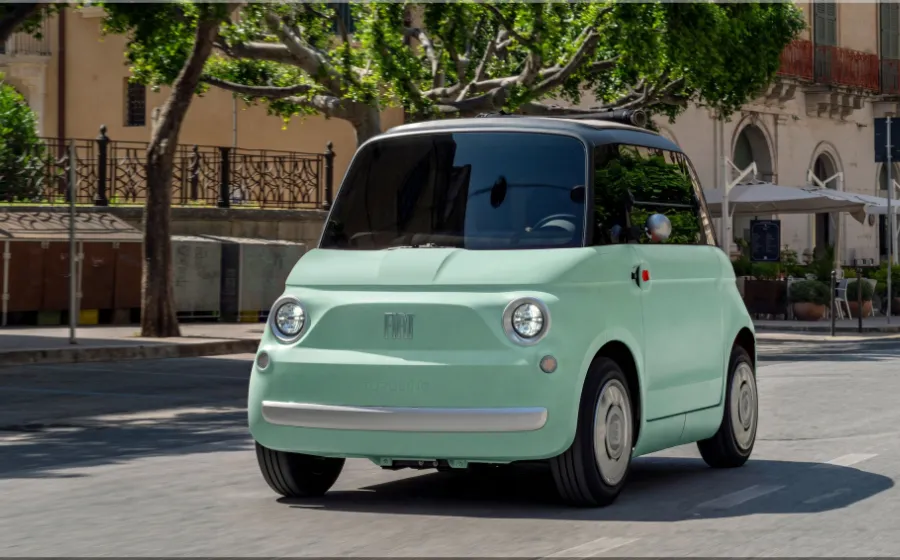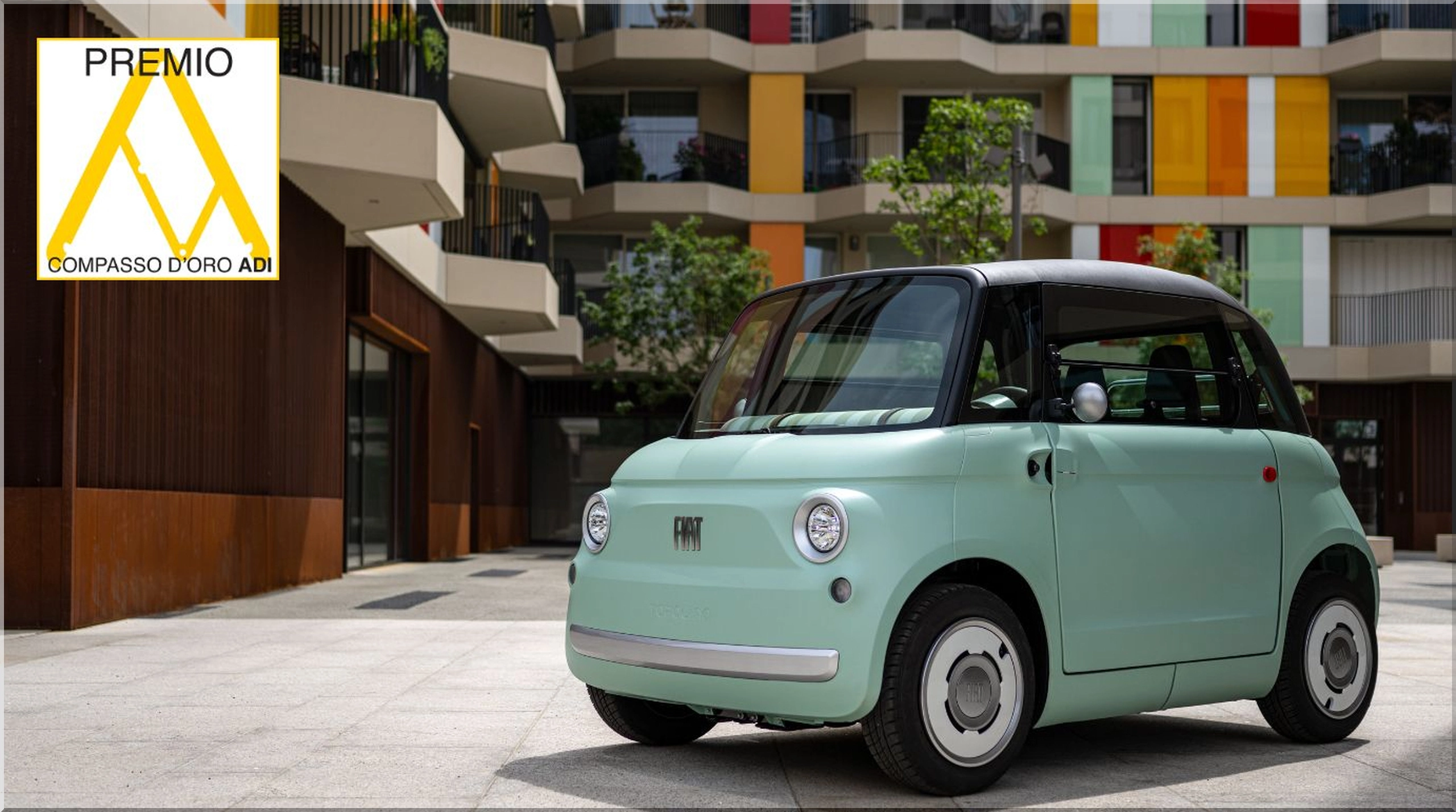
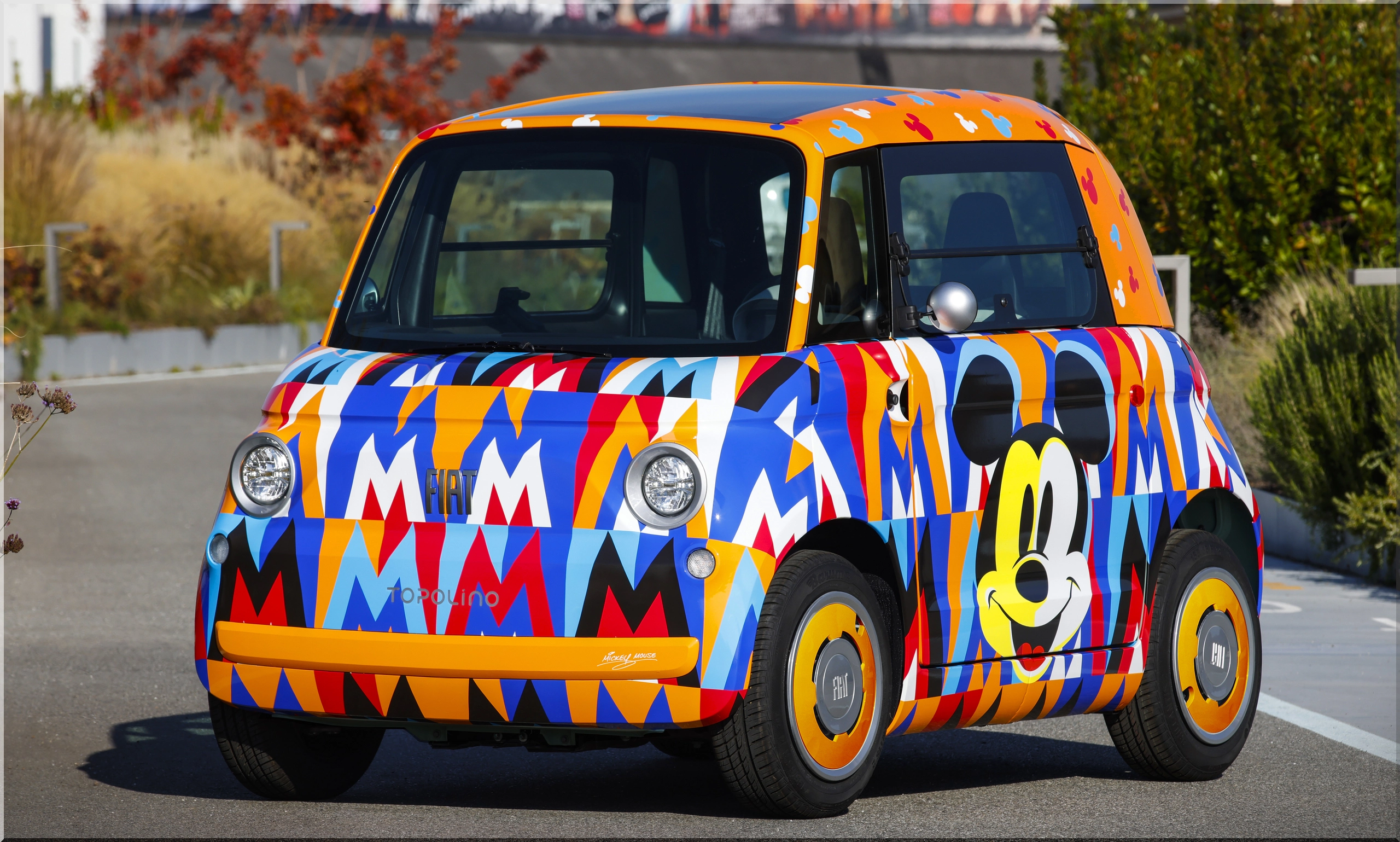
A tiny electric Fiat has parked beside Italy's finest design work. The Fiat Topolino Compasso d'Oro win proves that good urban mobility can arrive with 5.4 kWh, two seats, and enough charm to make a parking meter seem grumpy.
Fiat Topolino Claims Italy's Leading Design Prize
The international jury for the XXIX Premio Compasso d'Oro ADI chose the Fiat Topolino among 20 winning projects. ADI held the ceremony at its Milan design museum on May 22, 2026. Fiat announced the result three days later and credited designer François Leboine.
That context gives the trophy weight. Architect Gio Ponti and department store La Rinascente started the Compasso d'Oro in 1954. ADI now runs a two-year selection process. Its 2026 jury assessed work that answers present-day human and industrial needs.
The Topolino now joins ADI's historic Compasso d'Oro Collection in Milan. Italy grants the 2,500-piece collection official artistic and historical status. Fiat gains a lasting place in a public design record, rather than a shiny object for the office shelf.
ADI's official winner list names the Fiat Topolino and credits Leboine. The little Fiat shared the 2026 list with furniture, a railway robot, a wheelchair, a bicycle, and a catamaran. Good design, it seems, does not check the parking space.
Why the Fiat Topolino Design Works
The award celebrates restraint. Many new vehicles chase attention through taller screens, sharper creases, and feature menus deep enough to lose an afternoon. Topolino takes the opposite route. It gives drivers a compact shell, simple controls, a small battery, and a friendly face.
That simplicity starts with the package. The electric quadricycle measures 2.53 meters, or 8.3 feet, long. It carries two people, reaches 45 km/h, or 28 mph, and offers up to 75 km, or 47 miles, of official range. Owners can charge it through a domestic socket.
| Feature | Fiat Topolino detail | Daily benefit |
|---|---|---|
| Vehicle class | L6e light quadricycle | Suits low-speed urban use |
| Length | 2.53 m / 8.3 ft | Fits short parking spaces |
| Seats | Two | Covers solo trips and one passenger |
| Top speed | 45 km/h / 28 mph | Matches many city streets |
| Battery | 5.4 kWh | Keeps energy needs modest |
| Official range | Up to 75 km / 47 miles | Covers many daily urban routes |
| Charging | Domestic socket | Avoids a dedicated fast charger |
Each number supports a clear use case. Fiat did not shrink a family hatchback and call the task complete. The company built the Topolino around short trips, narrow streets, slow traffic, and scarce parking. That focus lets every centimeter work harder.
Definition: What Does L6e Light Quadricycle Mean?
European Union rules place four-wheeled vehicles in the L6e light quadricycle class when they meet strict limits. The rules cap design speed at 45 km/h and running mass at 425 kg. They also allow no more than two seats, including the driver's seat.
National governments set licence and minimum-age rules, so access changes across Europe. Some countries let younger drivers use L6e vehicles with the required moped licence. Buyers should check local law before handing a teen the keys and a heroic sense of punctuality.
L6e status sets the Topolino apart from an M1 passenger car. It serves lower-speed roads under a different approval framework. Drivers should check speed, permitted roads, and occupant protection.
The Details That Turn Simplicity Into Character
Simple products can feel cheap, cold, or unfinished. The Topolino avoids that trap by giving each visible element a clear job and a cheerful tone.
A Friendly Face Lowers the Social Temperature
Rounded lamps, a short nose, clean sides, and wheels near the corners make the Topolino easy to read. Its face looks alert without acting angry. Cities place vehicles close to walkers, cyclists, cafe tables, and front doors. A visually gentle machine suits that setting.
The proportions tell the truth. Nobody will mistake this Fiat for a long-distance cruiser. Its tall cabin signals room for two, while its tiny footprint signals local duty.
Fiat Uses Heritage Without Copying the Past
The Topolino name links the new EV to Fiat's first 500, sold from 1936 to 1955. Italians commonly called that small car Topolino, or little mouse. The old model brought personal transport to a broad public. The new model applies that idea to electric city travel.
Fiat wisely avoided a literal remake. The current vehicle borrows the original's optimism and small scale, then speaks in a clean, contemporary voice. The result feels familiar without dressing up for a costume party.
Fewer Choices Make the Product Easier to Grasp
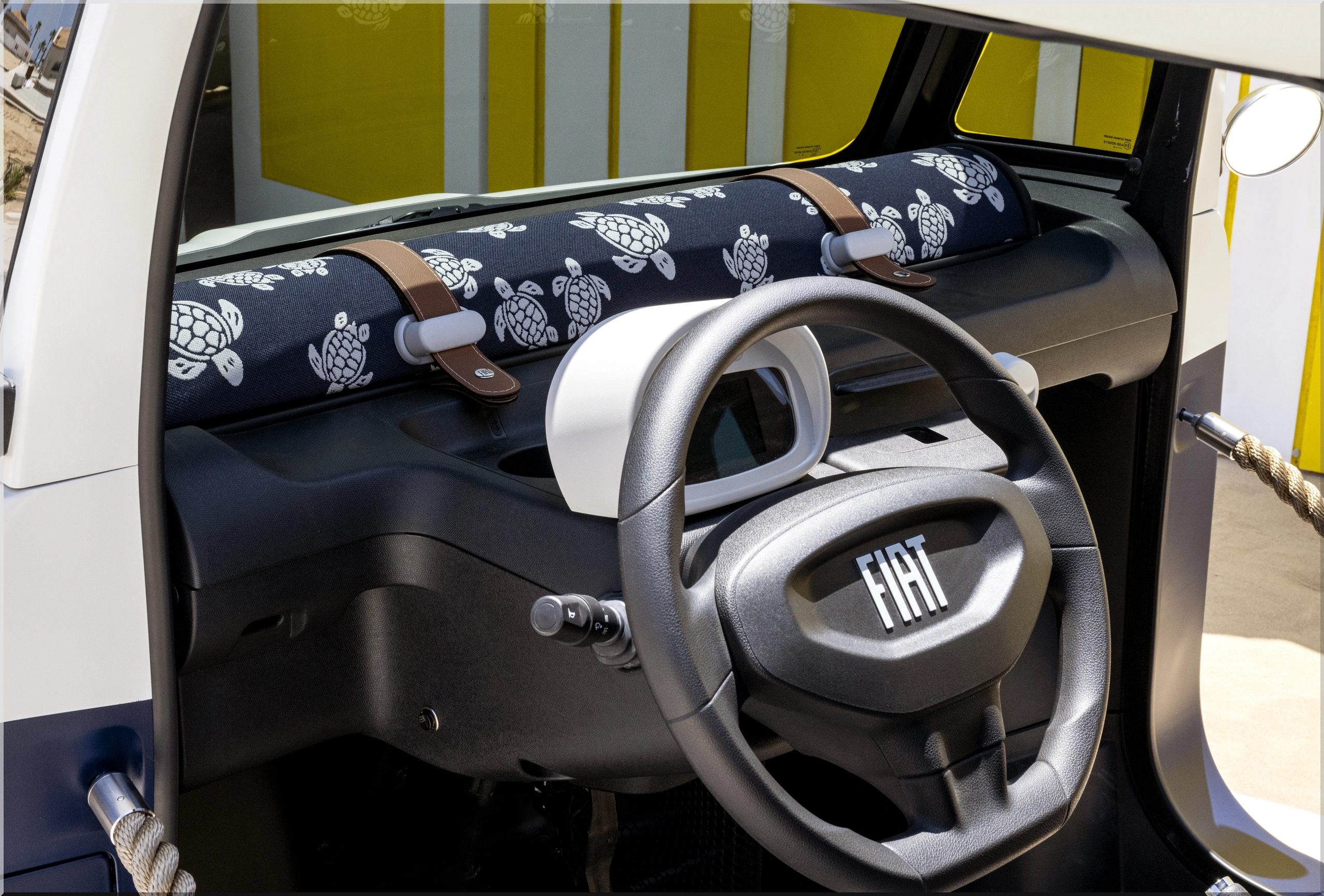
At launch, Fiat offered one color, one wheel design, and one cabin scheme. Buyers could add practical touches, such as a rear luggage carrier, a fabric storage band, and vintage-look mirrors. This tight menu made the Topolino easy to understand and easier to order.
Fiat added the Corallo color and a larger digital display in February 2026. The screen grew from 3.5 inches to 5.7 inches, while the full panel reached 8.3 inches. The update improved legibility without turning the dashboard into a cinema lobby.
Wide glass areas open the cabin. Staggered seats give each occupant useful shoulder room. At-home charging removes technical fuss. Urban electric travel should ask little from its user.
What Socially Relevant Design Means on the Road
Fiat described the Topolino's design as socially relevant, and the phrase deserves plain English. The vehicle targets trips that full-size cars often handle poorly: a short school run, a local commute, a grocery stop, or a quick cross-town errand.
A 5.4 kWh battery carries far less capacity than a mainstream electric car pack. That limits range, yet it also keeps the vehicle compact and its charging demand low. The design asks a sensible question: how much machine does a short city trip really need?
The answer will differ by household. A family may use a Topolino as a second vehicle. A young driver may gain independent local transport under national rules. An older resident may value easy entry and parking. A small business may see a neat local runabout.
Fiat reported that the Topolino led Europe's quadricycle market in 2025 with a 20% share. Buyers, then, have backed the idea with real orders. The Compasso d'Oro adds expert design approval to that commercial result.
The Award Does Not Erase the Topolino's Limits
Great product design starts with a precise job. It does not make one machine suitable for every task. The Fiat Topolino range and speed fit urban routines, but they create firm boundaries.
- A 45 km/h maximum rules out motorway use and makes fast arterial roads a poor fit.
- The official 75 km figure represents an upper rating, not a promise for every trip.
- Cold weather, hills, cabin heating, payload, and driving pace can reduce usable range.
- Two seats and compact storage restrict family and cargo duties.
- L6e approval differs from passenger-car approval, so buyers should study safety equipment and test results carefully.
- Domestic charging works best for people with reliable access to a suitable socket.
Pro-Tip: Map a full week of trips before buying. Add distance for errands, detours, and cold days. If the plan consumes nearly all 75 km, choose a vehicle with a larger operating cushion.
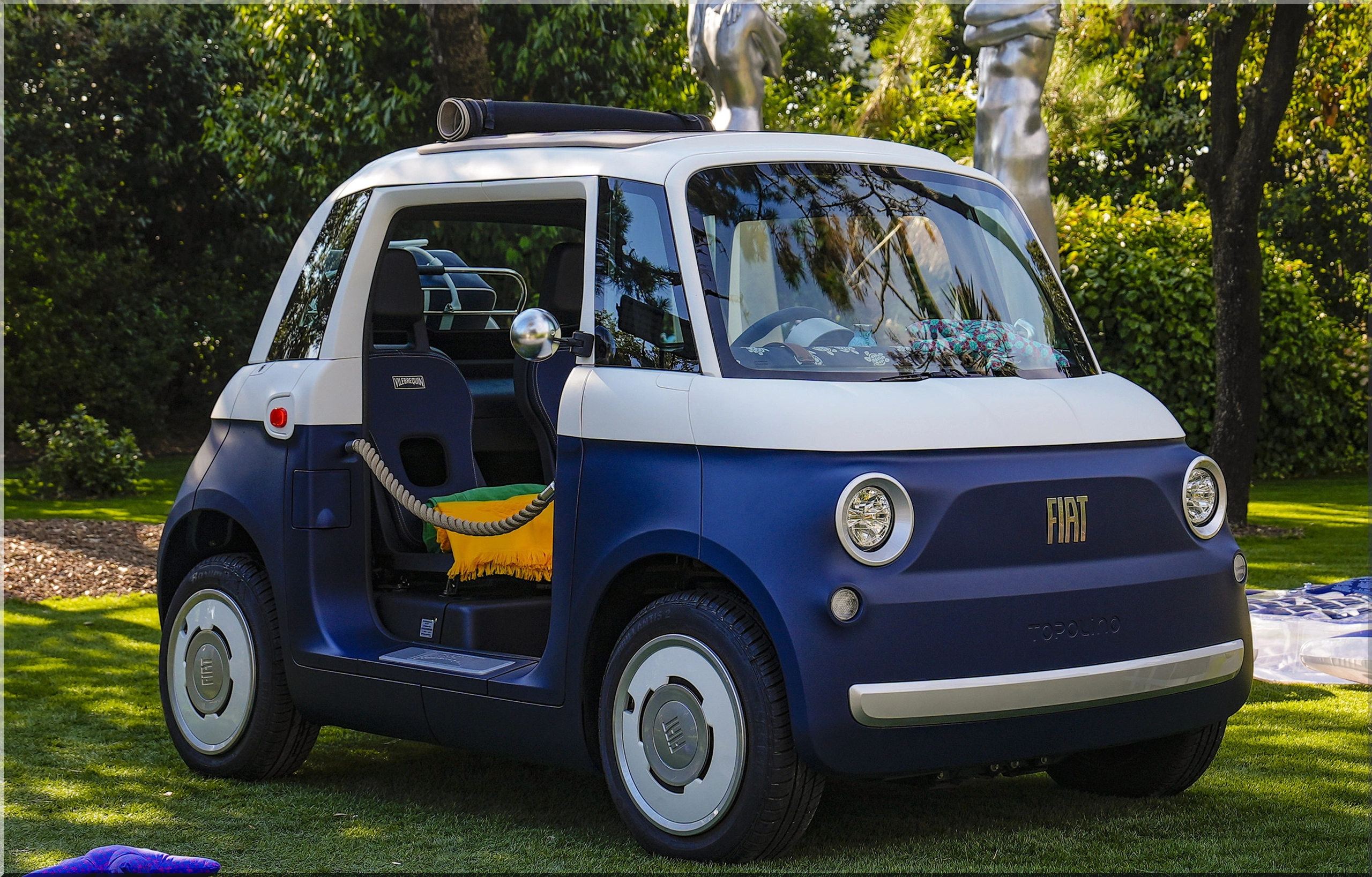
Weather also deserves attention. The closed Topolino offers greater protection for year-round use, while the open Dolcevita version favors sunny streets and coastal moods. The prettiest rope door in town still loses an argument with sideways rain.
Who Should Put the Fiat Topolino on a Shortlist?
The Topolino makes its strongest case within one urban area. It suits homes with a long-distance vehicle, households that pair cars with public transit, and users who prize easy parking over highway pace.
It may suit you if you:
- Drive short, repeatable routes on low-speed streets
- Need two seats rather than four or five
- Can charge near home or work
- Know which roads permit L6e vehicles
- Accept limited cargo room
- Want lower energy use than a full-size EV demands
Look elsewhere if your routine includes motorways, long rural stretches, several passengers, or frequent bulky cargo. The same advice applies if you depend on public chargers. A domestic plug sounds wonderfully simple until the nearest safe socket lives three floors above the street.
How to Assess a Fiat Topolino Before You Buy
An award can earn your attention. A proper test should earn your money. Use this five-step check before signing an order.
- Trace your real route. Drive every regular street and check speed limits, hills, traffic flow, and legal access.
- Confirm local licence rules. Check the driver's age, required permit, passenger rules, and any road restrictions with the national authority.
- Test the cabin. Sit in each seat, check shoulder space, inspect visibility, and load the items you carry most often.
- Plan charging. Identify a safe socket, cable path, charging schedule, and backup option away from home.
- Price the full year. Add insurance, registration, maintenance, electricity, financing, and any parking costs. Compare that total with public transit, an e-bike, and a small used car.
Ask the dealer about the exact model year and equipment. Fiat expanded the Topolino family during 2026, so display size, color, roof, and trim can differ. Request a written specification for the vehicle you will receive.
A Small Gold Winner With a Clear Job
The Fiat Topolino Premio Compasso d'Oro win rewards an idea that urban transport often forgets: a product can do less and serve its chosen task better. Fiat gave the Topolino modest speed, modest range, and an unusually generous personality.
Next, check your local L6e rules, measure your weekly distance, and arrange a test drive on roads you use. The jury judged the design. Your parking space, weather, and daily schedule will judge the fit.
- 48 views